
Please Choose Your Language
Views: 0 Author: Site Editor Publish Time: 2026-05-18 Origin: Site


While maintenance teams frequently ask for a "sight glass" or "water glass," relying on these casual names can compromise industrial safety. The correct engineering term for this critical component is a Liquid Level Gauge. Using outdated terminology often leads facility managers to procure incorrect, non-compliant, or potentially hazardous replacement parts for highly pressurized boiler systems. Misidentifying the equipment masks the massive differences in pressure ratings and chemical resistance among various glass types.
We will guide you from merely defining the correct terminology to evaluating advanced commercial replacement options. You will learn how standard cut-to-length tubular glass compares against high-pressure upgrades. Specifically, we will contrast legacy equipment with robust flat tempered designs, focusing on ASME compliance, Total Cost of Ownership (TCO), and implementation safety.
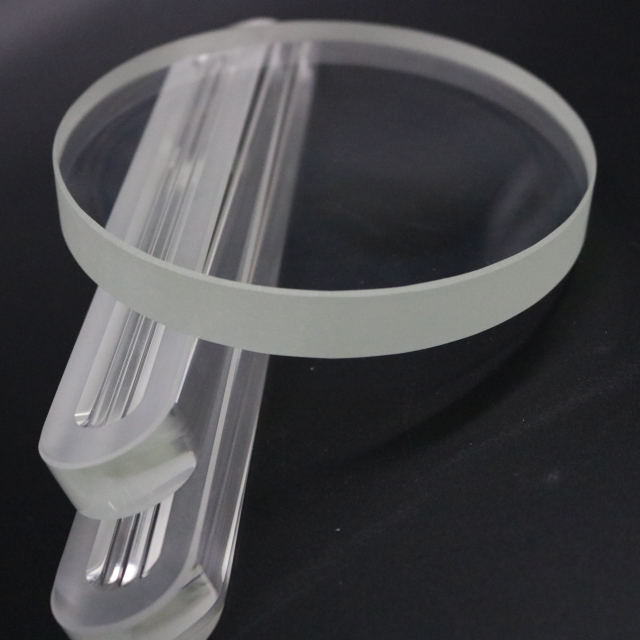
The industry-standard name for a boiler sight glass is a Liquid Level Gauge.
Standard tubular glass is typically annealed borosilicate (not tempered) to allow for field cutting; specifying tempered glass for cut-to-length tubular applications is a critical procurement error.
High-pressure or heavy-duty boilers require transitioning from tubular designs to armored, flat-glass solutions.
Upgrading to a Flat Boiler Tempered Sight Glass Sheet Plate significantly improves TCO by reducing catastrophic blowout risks and minimizing maintenance downtime.
ASME compliance and proper seal selection (e.g., lathe-cut vs. molded EPDM washers) are non-negotiable for system safety and legal operation.
Industry professionals must shift their vocabulary from "sight glass" to "liquid level gauge." In industrial procurement, precise language acts as your first line of defense against costly mistakes. A common error involves mismatching sight flow indicators with liquid level gauges. Sight flow indicators monitor fluid movement within piping networks. Liquid level gauges monitor fluid volumes inside static vessels and tanks. Ordering the wrong classification will result in inadequate pressure ratings and immediate safety hazards.
Liquid level gauges are strict requirements under the ASME Boiler and Pressure Vessel Code (BPVC). They serve as the ultimate visual failsafe against dry-firing. Dry-firing occurs when water levels drop below the heating elements. This condition rapidly causes catastrophic overpressurization, metallurgical failure, or even a complete firebox collapse. Electronic sensors can fail or send false signals due to scale buildup. The manual liquid level gauge provides direct, unalterable visual confirmation of the actual water level.
Plant managers should evaluate existing gauges through a comprehensive safety lens. Do not audit them solely for visibility. You must audit them for structural integrity and strict compliance with current codes.
Best Practice: Schedule bi-annual audits of all boiler glass components. Verify the glass material matches the specific boiler operating pressure.
Common Mistake: Ignoring thinning glass near the packing nuts. This wear indicates imminent failure and requires immediate replacement.
Standard tubular gauges provide straightforward visual indication but come with severe limitations. Manufacturers typically rate them for a maximum of 425°F or 125 PSI. You will find them primarily on light-duty or residential steam systems.
A dangerous myth persists regarding tubular glass materials. Many technicians assume tubular glass is tempered. It is absolutely not. Tubular glass consists of standard annealed borosilicate. Maintenance teams must score and cut the tube to exact lengths on-site. If you attempt to cut tempered glass, the internal stress will cause it to shatter instantly into thousands of pieces. Specifying tempered glass for cut-to-length applications is a fundamental procurement error.
High-pressure industrial boilers demand a completely different architecture. When evaluating heavy-duty options, you must know when to specify a Flat Boiler Tempered Sight Glass Sheet Plate. These units replace fragile tubes with thick, armored transparent plates.
Flat sheet plates arrive pre-cut from the factory. This allows manufacturers to thermally temper them. Sometimes, engineers fuse the glass directly with metal rings. Metal shrinks more than glass as it cools. This difference forces the glass into a state of permanent compressive stress. Glass naturally fails under tensile stress (pulling forces). By pre-loading the glass with compressive stress, you vastly increase its tensile strength and burst pressure threshold.
You must select the correct architecture based on operating conditions. Use system pressure, vibration levels, and required lifespan as your primary criteria. The following chart outlines the operational differences.
Criteria | Tubular Glass Gauges | Flat Tempered Sheet Plates |
|---|---|---|
Maximum Pressure | Usually limited to 125 PSI | Can exceed 3000+ PSI (depending on design) |
Material Composition | Standard annealed borosilicate | Thermally tempered or fused borosilicate/aluminosilicate |
Field Modification | Can be scored and cut on-site | Pre-cut; cannot be modified post-tempering |
Vibration Tolerance | Low; easily cracks at the packing nut | High; armored housing absorbs mechanical stress |
Reflex gauges leverage specific optical physics to improve visibility. The interior face of the glass features precise 90-degree vertical grooves. These grooves alter light refraction based on the medium they touch.
When light hits the vapor (steam) zone, the grooves reflect the light back to the operator. The steam appears as a bright, silvery-white column. When light hits the liquid (water) zone, it refracts directly into the fluid. The water zone appears almost entirely black. This extreme contrast eliminates the need for external backlighting, making reflex gauges highly efficient in well-lit environments.
Implementation Risk: Never deploy reflex plates in systems operating over 60 bar (approximately 870 PSI). High-pressure boiler water contains aggressive softeners and chemical treatments. These chemicals rapidly etch the exposed grooved glass. Etched grooves lose their refractive properties, causing false or invisible readings.
Transparent architectures utilize two robust flat plates mounted opposite each other. They require a backlight to illuminate the fluid column. Upgraded versions feature bi-color technology. By utilizing different optical wavelengths, the backlight projects red for steam and green for liquid.
Transparent setups offer massive scalability for ultra-high-pressure applications. Because the inner glass surface is completely flat, you can install specialized mica shields. Mica shields act as transparent, sacrificial barriers. They protect the actual glass from the corrosive boiler chemicals and high-alkalinity water, greatly extending operational lifespan.
Facility budgets often miscalculate the true cost of glass replacement. Cheap tubular glass costs very little upfront. However, it requires frequent replacement cycles due to thermal shock, chemical etching, and accidental mechanical impacts. Upgrading to a Flat Boiler Tempered Sight Glass Sheet Plate shifts this financial equation. The higher initial investment yields a near-zero blowout risk and extends the operational timeline by years.
Boiler operators perform daily blowdown tests, commonly known as "bobbing." Bobbing clears scale and sludge from the gauge valves. During this routine maintenance, technicians often overtighten the face-seals on tubular setups, accidentally cracking the fragile tube.
Professional Flat Boiler Tempered Sight Glass Sheet Plate assemblies eliminate this vulnerability. Modern flat glass setups utilize side-wall sealing or fused metal rings where the heavy steel housing absorbs the bolt torque. This design minimizes the risk of cracking from overtightening, sharply reducing wasted maintenance labor and emergency repairs.
Smart procurement teams do not view high-quality gauge glass as a consumable purchase. They view it as an insurance policy. A sudden glass blowout triggers an immediate, unplanned boiler shutdown. It also creates extreme steam release hazards for nearby personnel. The cost of one hour of unplanned operational downtime usually exceeds the lifetime cost of premium flat plate assemblies.
Procuring replacement glass requires exact dimensions. Standard tubular setups feature an outer diameter (OD) of 5/8 inch. Tubular lengths generally vary from 8 inches to 36 inches, depending on the casting. Because technicians cut tubes on-site, ordering slightly longer tubes causes no issues.
Flat plates follow different rules. Flat plates require exact housing dimensions. You cannot alter them post-tempering. Before ordering, maintenance teams must measure the precise visible length and overall recess length of the armored housing.
Ordering the bare glass is never enough. You must secure the correct Bill of Materials (B.O.M.). Relying on old gaskets guarantees immediate steam leaks.
Component | Requirement & Specification |
|---|---|
Washers / Gaskets | Specify high-grade EPDM. Differentiate between lathe-cut (better for flat surfaces) and molded designs. |
Friction Nuts | Use high-quality brass friction nuts. Brass prevents galling against the valve body threads. |
Mica Shields | Mandatory for transparent flat plates operating above 60 bar to prevent chemical etching. |
Physical replacement carries severe burn and pressure hazards. Strict adherence to isolation protocols keeps your team alive.
Isolate the Unit: Lock out and tag out the upper and lower gauge valves.
Drain Residual Pressure: Open the petcock (drain valve) fully. Verify absolutely no steam or water remains in the column.
Remove Debris: Clear all old rubber, scale, and glass shards from the seating area using a brass pick.
Install Evenly: When assembling a flat plate, tighten the bolts in a standardized star pattern.
Critical Warning: Face-seal overtightening remains the leading cause of premature flat glass failure. Uneven stress distribution causes invisible micro-fractures in the temper zone. Always use a torque wrench and follow the manufacturer's exact torque specifications.
Stop using vague terms like "sight glass." Adopt the term Liquid Level Gauge to ensure procurement accuracy.
Understand that tubular glass is never tempered. It serves well for light duty but fails under aggressive industrial conditions.
Armored flat glass solutions utilize compressive stress to survive massive pressures and thermal shocks.
Protect reflex glass from high-pressure chemical etching, or switch to transparent bi-color models with mica shields.
Next-Step Action: Audit your current boiler operating pressures today. If your systems run near their maximum thresholds, consult a certified pressure vessel vendor to quote appropriate flat plate assemblies before your next shutdown.
A: No. Tubular gauges must be cut to an exact length on-site using a specialized glass cutter. Tempered glass will shatter instantly if scored or cut.
A: The most common outer diameter (OD) for standard steam boilers is 5/8 inch, with an inner diameter of approximately 1/2 inch, though lengths vary by boiler casting.
A: Reflex glass is susceptible to chemical etching from boiler water softeners and treatments. If your system operates at high pressures, the glass will degrade faster, indicating a need to switch to a transparent plate with a protective mica shield.
A: Bobbing is a mandatory maintenance procedure where the operator quickly opens and closes the blowdown valve to flush out scale and verify that the water level returns swiftly, ensuring the lines are not blocked.


