
Please Choose Your Language
Views: 0 Author: Site Editor Publish Time: 2026-05-20 Origin: Site


Borosilicate glass holds a well-earned reputation across engineering sectors. Industry leaders consistently consider it the gold standard for combined thermal stability and chemical resistance. However, this premium status often masks significant practical drawbacks. Over-specifying materials frequently leads to bloated procurement budgets and unexpected mechanical failures in the field. Engineering teams sometimes assume a high thermal rating equates to overarching physical toughness. This assumption routinely causes costly deployment errors. We want to provide a transparent, engineering-focused breakdown of these limitations. You will discover the exact total cost of ownership (TCO) drivers and application risks associated with this material. We focus specifically on the industrial procurement of a Borosilicate 4.2 Glass Sheet. By the end, you can make smarter, data-backed material selections for your next hardware assembly.
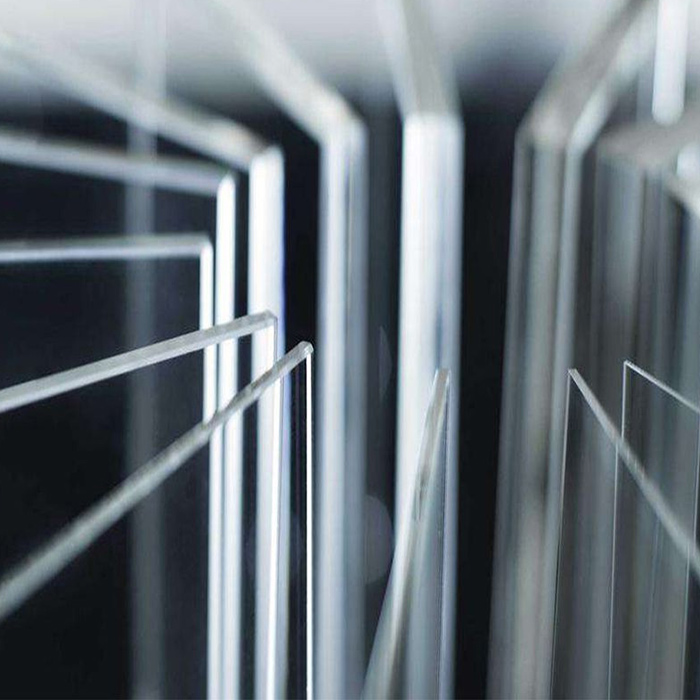
Mechanical Fragility: Borosilicate excels in thermal environments but lacks the blunt impact resistance of tempered soda-lime alternatives.
Shatter Hazard: Unlike tempered glass, borosilicate breaks into sharp, dangerous shards, posing safety and compliance risks in specific unshielded environments.
TCO Inflation: High melting points and complex annealing requirements significantly drive up raw material and fabrication costs.
Machining Bottlenecks: Customizing and edge-finishing a Borosilicate 4.2 Glass Sheet requires specialized tooling, impacting lead times and scalability.
Defining the operational environment establishes your true success criteria. You must explicitly differentiate between thermal shock survival and physical impact survival. A component might easily survive a rapid 200°C temperature drop. However, the exact same component might shatter under the light strike of a dropped tool. Engineers must evaluate physical threats just as rigorously as thermal loads.
Borosilicate possesses inherent brittleness compared to tempered alternatives. Soda-lime glass undergoes a rapid thermal quenching process during manufacturing. This creates deep compressive stresses on the surface. Borosilicate resists thermal expansion by design. Therefore, it cannot undergo standard thermal tempering easily. It behaves mechanically like standard annealed glass.
You will notice severe susceptibility to edge chipping during installation. Technicians frequently damage panels simply by resting them on hard surfaces. High-vibration operations also expose this weakness. Micro-fractures form along unpolished edges. These microscopic defects rapidly propagate into catastrophic structural cracks under continuous mechanical stress.
The failure mode of this material presents significant hazards. When broken, it fractures into large, jagged splinters. It does not crumble into the granular, "safe" chunks characteristic of tempered glass. These sharp shards act like heavy blades falling from the installation point.
This shatter profile introduces strict regulatory and compliance implications. Consumer-facing applications usually demand safety glazing standards like ANSI Z97.1. Unshielded borosilicate rarely meets these requirements. High-traffic industrial interfaces also carry severe OSHA liabilities. You must deploy additional protective measures, such as laminate films or metal mesh barriers, to mitigate these severe laceration risks.
Scaling a project using specialized materials demands harsh financial scrutiny. High initial costs cascade through your entire supply chain. You must understand the total cost of ownership and return on investment drivers upfront. Specifying premium glass heavily inflates both prototyping and full-scale production budgets.
Manufacturing this glass demands an incredibly energy-intensive process. The inclusion of boron trioxide fundamentally alters the required melting temperature. Furnaces must maintain temperatures well above 1600°C for extended periods. Standard glass melts at much lower thresholds.
These massive energy expenditures directly inflate unit pricing. High fuel consumption and specialized refractory brick degradation push factory overhead upward. Consequently, this inflates the unit price of a Borosilicate 4.2 Glass Sheet well beyond conventional options. The table below outlines exactly how these underlying manufacturing variables impact your total procurement cost.
Cost Driver Category | Impact on Borosilicate 4.2 | Financial Consequence (TCO) |
|---|---|---|
Furnace Energy Consumption | Requires >1600°C melting point. | Increases baseline material cost by up to 3x. |
Annealing Cycle Time | Slow, controlled cooling needed. | Reduces factory throughput, increasing lead times. |
Raw Material Purity | High-grade silica and boron trioxide. | Creates vulnerability to supply chain price spikes. |
Cutting, drilling, and molding this material introduces severe difficulty. Standard tooling struggles against its inherent hardness. Machinists must utilize specialized diamond-tipped drill bits and saw blades. Even optimal tools suffer rapid degradation. Water-jet cutting parameters require meticulous calibration to prevent micro-cracking.
Yield loss risks during post-processing further impact your ROI. Polishing surfaces or grinding smooth edges induces immense localized stress. A single microscopic flaw can cause the entire panel to split. If twenty percent of your batch breaks during edge-grinding, your effective unit cost skyrockets. You must factor these unavoidable scrap rates into your initial purchasing forecasts.
Deploying specialized glass within broader hardware assemblies uncovers strict structural realities. You cannot treat the material as an isolated, independent component. Surrounding structures interact dynamically under mechanical and thermal loads. Proper implementation requires holistic environmental analysis.
Sealing glass to metals or plastics introduces notorious engineering challenges. The specialized Borosilicate 4.2 Glass Sheet has a highly specific coefficient of thermal expansion (CTE of 4.2 x 10⁻⁶ /K). Most industrial metals expand much faster under heat. This severe CTE mismatch generates immense shear stress at the mounting interface.
You must anticipate potential gasket or adhesive failures under fluctuating temperatures. Common integration hazards include:
Rigid metal frames crushing the glass edges during thermal expansion.
Silicone adhesives losing bond integrity after repeated extreme thermal cycling.
PTFE gaskets creeping under compression, causing pressure leaks.
Fastener torque transferring unyielding point-loads directly into the brittle surface.
You must compare the specific gravity of your chosen glass against lightweight alternatives. Borosilicate has a density of roughly 2.2 g/cm3. Polycarbonate offers a drastically lighter profile at roughly 1.2 g/cm3. This density disparity fundamentally alters your structural framework requirements.
Weight becomes a massive drawback in mobile applications. Aerospace components cannot tolerate unnecessary mass. Portable medical devices demand absolute weight reduction for user ergonomics. Heavy glass viewports force engineers to design thicker, heavier mounting bezels. This cascading weight penalty negatively impacts fuel efficiency, device portability, and shipping costs.
Engineers need a pragmatic look at when to pivot away based on operational demands. You should evaluate materials across specific operational dimensions. No single substrate solves every engineering challenge perfectly. We compiled a functional capabilities chart to help visualize these crucial boundaries.
Material Type | Thermal Shock Limit | Impact Toughness | Shatter Safety | Relative Cost |
|---|---|---|---|---|
Borosilicate 4.2 | High (~165°C jump) | Low | Unsafe (Jagged) | Premium |
Tempered Soda-Lime | Low (~50°C jump) | High | Safe (Granular) | Economical |
Fused Quartz | Extreme (>1000°C) | Low | Unsafe (Jagged) | Astronomical |
Polycarbonate | Very Low (Melts) | Extreme | Safe (Doesn't Shatter) | Moderate |
You should select tempered soda-lime when facing a high risk of mechanical impact. Unpredictable blunt forces demand surface compression. Tempered variants survive hammer strikes that easily destroy untreated glass. They also provide mandatory compliance with safety-shatter standards.
This alternative perfectly suits projects requiring aggressive cost-containment. If your environment lacks extreme thermal fluctuations, you do not need premium thermal stability. Standard display screens, architectural windows, and heavy machinery guardrails perform flawlessly using tempered soda-lime. You save budget without sacrificing physical security.
Certain extreme environments exceed continuous operating temperature limits. Borosilicate typically degrades above 500°C over long durations. Fused quartz easily withstands continuous exposure above 1000°C. Sapphire offers unmatched hardness against abrasive environments.
You must specify these ultra-premium materials for specialized optics. Applications demanding extreme UV transmission fail with standard glass compositions. Semiconductor manufacturing requires absolute chemical purity to prevent wafer contamination. In these highly niche, zero-tolerance environments, the massive procurement costs of quartz and sapphire become fully justified.
Plastics outpace glass when disposability becomes your primary driver. Single-use laboratory equipment relies heavily on polypropylene. You eliminate the massive costs associated with autoclave sterilization cycles. Polycarbonate dominates when weight reduction takes absolute precedence.
Absolute shatterproof requirements often overrule scratch resistance. You can scratch a plastic viewport easily. However, a dropped polycarbonate shield will bounce instead of fragmenting. You trade long-term optical clarity for immediate, unbreakable operator safety.
Engineering and purchasing teams require a step-by-step logic gate. You must eliminate guesswork from your material selection process. Follow this structured decision framework to safeguard your project deliverables.
Identify the Primary Threat: You must isolate the dominant failure risk. Is the system facing severe thermal shock? Does it encounter constant chemical corrosion? Or is physical impact the most probable hazard? Isolate the number one threat before reviewing data sheets.
Analyze the TCO: Evaluate the true lifecycle longevity. Does the extended lifespan offset the premium initial cost? Consider the fabrication difficulty and expected scrap rates. A cheaper material might require replacement twice a year, shifting the TCO in favor of premium glass over a decade.
Consider Hybrid Assemblies: Explore modular structural designs. You can place a thin thermal barrier behind a thick tempered impact shield. This composite approach mitigates individual material weaknesses. You capture high thermal resistance internally while maintaining physical armor externally.
Actionable Next Step: Never commit blindly to high-volume purchase orders. Request rigorous stress-testing data from your suppliers. Demand precise CTE matching charts. Conduct small-batch assembly tests under simulated environmental loads to validate gasket integrity.
While borosilicate offers unrivaled combined thermal and chemical stability, it is not a universal solution. You must recognize that mechanical fragility fundamentally limits its deployment in high-impact zones. Your engineering team needs to weigh the elevated procurement costs against realistic environmental threats.
Proper specification requires accepting these specific limitations. You must strictly match this material to environments where its exact thermal strengths are completely non-negotiable. Begin your procurement process by requesting matching CTE data and small prototyping batches to validate your mounting assemblies.
A: Yes, it shatters easily under blunt physical impact. While it offers near-total immunity to sudden thermal shock, it lacks the tensile strength of tempered glass. A light strike from a hard object can cause immediate, jagged fragmentation.
A: The inclusion of boron trioxide forces the melting point above 1600°C. This requires specialized furnaces, massive energy consumption, and slower annealing cycles. These high-temperature manufacturing realities directly inflate raw material and fabrication costs.
A: Technically yes, but it is highly cost-prohibitive and technically limited. Its extremely low coefficient of thermal expansion makes inducing the necessary surface compression exceptionally difficult. Chemical tempering is possible but rarely justifies the massive added expense.
A: Yes, it is significantly heavier. Borosilicate has a specific gravity of approximately 2.2 g/cm³, whereas polycarbonate sits around 1.2 g/cm³. This density difference forces engineers to account for nearly double the material weight in structural designs.


