
Please Choose Your Language
Views: 0 Author: Site Editor Publish Time: 2026-05-18 Origin: Site


Industrial fluid and chemical monitoring carries massive stakes for modern manufacturing facilities. A single material failure easily leads to hazardous chemical leaks, expensive batch contamination, or unplanned operational downtime. Plant managers simply cannot afford blind spots when handling volatile or highly corrosive media. Standard commercial glass inevitably fails here. It cannot survive severe thermal environments or aggressive chemical washes.
Facilities need an engineering-grade material built specifically for these extreme conditions. Borosilicate transparent glass delivers exactly this required resilience. It stands as a fundamentally different material from conventional window glass. In this guide, we explore why this material serves as the definitive standard for continuous observation components. You will learn the specific molecular engineering making it indispensable for plant safety.
We will specifically highlight why operators upgrade to a Trough Type Transparent Sight Glass Borosilicate when ordinary tempered panels crack under stress. You will also discover evaluation criteria for specifying sight glasses to maximize your total cost of ownership.
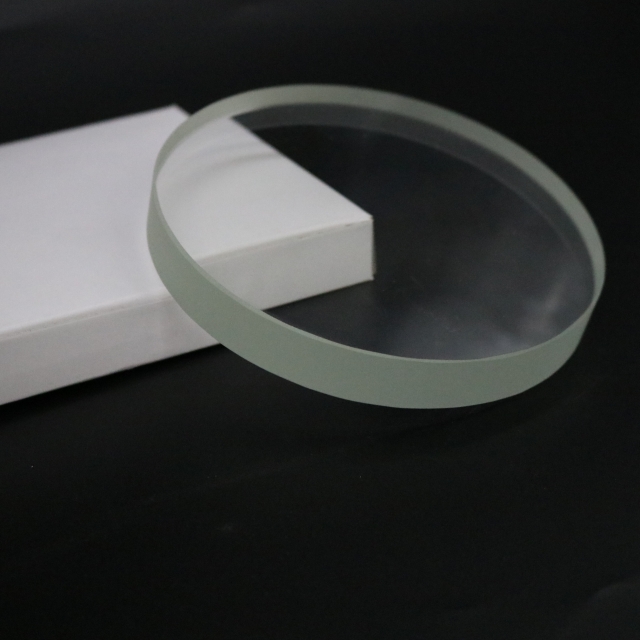
Chemical Structure: Formed with ~80% silica and 13-15% boron trioxide, creating a dense, highly cross-linked molecular network that resists chemical leaching.
Thermal Superiority: Features a uniquely low Coefficient of Thermal Expansion (CTE of 3.3 × 10⁻⁶ K⁻⊃1;), allowing it to withstand sudden temperature shocks of up to 166°C without fracturing.
Industrial Application: Borosilicate is the non-negotiable standard for a professional Trough Type Transparent Sight Glass Borosilicate and chemical reactors requiring continuous, unclouded visual monitoring of corrosive or high-temperature media, ensuring structural stability where flat tempered panels fail.
TCO Reality: While initial procurement costs are higher due to extreme manufacturing requirements (1650°C melting point), ROI is realized through exponentially longer operational lifespans and reduced maintenance intervals.
Industrial troughs expose monitoring windows to incredibly harsh daily conditions. Standard soda-lime glass components degrade rapidly over time in these environments. Facilities face a severe business problem when observation windows fail. Soda-lime glass either shatters violently from continuous thermal cycling or slowly turns opaque. This clouding occurs due to chemical etching. Aggressive fluids literally eat away the glass surface. This degradation destroys all visual monitoring capabilities and forces unexpected production halts.
We solve this structural weakness at the molecular level. Glass manufacturers introduce boron trioxide into the silica mixture. This acts as a powerful "network former" during the melting process. Boron structurally binds the silica matrix together. It drastically lowers the required alkali content inside the final product. Ordinary glass relies heavily on alkali fluxes, making it vulnerable to chemical attacks. Borosilicate minimizes this vulnerability entirely.
This unique chemistry produces an exceptional outcome. The dense molecular network prevents chemical ions from leaching into the fluid stream. It also stops fluid ions from migrating into the glass surface. Operators preserve extreme optical clarity even after prolonged exposure to aggressive industrial solvents, concentrated acids, or caustic cleaning agents. You maintain a pristine viewing window over years of harsh processing. The material simply refuses to degrade.
Engineers evaluate sight glass materials across several strict operational dimensions. You must align physical properties directly with expected industrial outcomes. Thermal shock tolerance often drives the initial specification. Borosilicate features a profoundly low Coefficient of Thermal Expansion (CTE). We measure this at approximately 3.3 × 10⁻⁶ K⁻⊃1;. This rating sits at roughly one-third the expansion rate of standard commercial glass. An engineer can subject borosilicate to direct, rapid temperature swings safely. For example, you can execute cold water cleaning flushes immediately after high-temperature processing runs. The glass will not suffer catastrophic micro-fracturing.
Mechanical hardness provides the next critical evaluation metric. Borosilicate achieves a high Vickers hardness rating, typically ranging between 5.8 and 6.2 GPa. Industrial environments frequently process abrasive particulate flows or heavy slurries. Constant friction against a viewing window quickly scratches softer materials. Superior scratch resistance ensures the sight window remains perfectly transparent over years of heavy use. You eliminate the need for frequent replacement due to physical abrasion.
Chemical inertness guarantees compliance and safety across regulated industries. Borosilicate meets strict USP Type I equivalent standards. This classification makes it mandatory for demanding pharmaceutical, semiconductor, and food-grade applications. These sectors enforce zero-leaching compliance rules. Standard glass releases sodium and other contaminants into high-purity batches. Borosilicate remains totally inert, protecting both product integrity and facility safety.
Evaluation Metric | Standard Soda-Lime Glass | Borosilicate Transparent Glass | Industrial Impact |
|---|---|---|---|
Thermal Expansion (CTE) | ~9.0 × 10⁻⁶ K⁻⊃1; | 3.3 × 10⁻⁶ K⁻⊃1; | Borosilicate survives sudden cold flushes without shattering. |
Hardness (Vickers) | ~5.0 GPa | 5.8 – 6.2 GPa | Borosilicate resists abrasive slurry scratches, maintaining clarity. |
Chemical Inertness | Low (High alkali leaching) | Extreme (USP Type I compliant) | Borosilicate prevents batch contamination in pharma processing. |
Safe Temp Shock Margin | Under 50°C | Up to 166°C | Allows aggressive Clean-in-Place (CIP) thermal cycles. |
Industrial observation requires highly specialized component shapes. We define the "trough type" application as elongated or continuous-flow observation windows. Manufacturers install these specifically in fluid level monitoring systems, specialized chemical reactors, and long pipeline troughs. These scenarios demand wide, unobstructed viewing fields. Standard circular sight glasses often provide insufficient visibility for complex fluid flow analysis. An elongated window solves this.
Operational necessity dictates material choice here. Facilities explicitly specify a Trough Type Transparent Sight Glass Borosilicate over cheaper alternatives. Long glass panels face immense structural stress. They easily warp or bow under sustained high temperatures. Borosilicate prevents this deformation entirely. It provides a wide, distortion-free viewing area. Plant operators can accurately read fluid levels, check color consistency, and spot early phase separation without optical interference. The rigid network structure maintains perfect flatness.
Safety margins also drive this specification. We must consider the predictability of failure. Industrial environments carry inherent impact risks from dropped tools or heavy machinery collisions. If severe mechanical impact breaches borosilicate, it breaks differently than standard glass. It fractures into larger, more predictable shards rather than shattering into dangerous micro-fragments or explosive dust. This specific structural integrity emphasizes safety for operators monitoring active troughs closely.
Common Mistake: Facility managers often assume tempered soda-lime glass offers sufficient safety for large troughs. However, large tempered panels release massive stored energy when breached. This creates hazardous blowouts in pressurized chemical systems. Borosilicate handles these specific pressures safely.
Procurement teams frequently struggle to justify advanced material costs. You need a clear shortlisting framework. We recommend specifying standard soda-lime glass only for ambient-temperature fluid observation. Use it for non-corrosive media, low-pressure troughs, and harmless water monitoring systems. In these specific baseline scenarios, budget remains the primary driver. Soda-lime performs adequately when you eliminate heat and chemical threats.
However, you must transition to advanced materials when operational risk increases. We establish strict criteria for mandatory upgrades. Use the following decision logic to determine if borosilicate is non-negotiable for your facility.
Operating temperatures exceeding 150°C: Standard glass weakens rapidly above this threshold. Borosilicate maintains total structural integrity well beyond typical industrial boiling points.
Presence of highly corrosive acids or APIs: Active Pharmaceutical Ingredients (APIs) and industrial solvents etch ordinary glass. Borosilicate blocks chemical corrosion entirely.
Aggressive washdown protocols: Clean-in-Place (CIP) and Sterilize-in-Place (SIP) processes involve rapid, extreme temperature changes. Standard glass fractures under this thermal shock.
You can perform a simple visual and acoustic check to differentiate the materials physically. Borosilicate possesses distinct physical density differences. It feels slightly lighter in overall mass compared to soda-lime glass. Yet, it remains structurally more rigid. This unique density results in a different acoustic resonance. Tapping borosilicate produces a duller "clunk" sound, rather than the high-pitched "clink" of standard glass. Additionally, inspecting the edge profile reveals a completely un-tinted, clear appearance. Soda-lime typically displays a slight green or blue tint along its edges due to iron impurities.
Evaluating specialized industrial glass requires looking beyond the initial purchase order. We address the upfront cost premium transparently. High-performance borosilicate typically costs 40% to 80% more than standard commercial glass. The 1650°C melting point requires immense energy and strict quality control during manufacturing. However, you must frame this premium against long-term operational reality. Calculate the devastating cost of an unexpected production line shutdown. Factor in replacement labor, lost batch revenue, and potential environmental clean-up fines if a standard sight glass shatters mid-process. The return on investment (ROI) materializes rapidly through exponentially longer lifespans.
Successful deployment relies heavily on correct installation. High-quality materials fail if improperly handled. We highlight two critical implementation risks you must actively manage.
Torque Sensitivity: We strongly warn against uneven bolt tightening during installation. Borosilicate resists heat and chemicals beautifully, but it remains a brittle material. Uneven mechanical stress on the mounting flange causes localized tension. This tension inevitably leads to structural fractures. Technicians must use calibrated torque wrenches and follow strict star-pattern tightening sequences.
Gasket Compatibility: A premium sight glass is only as good as its surrounding seal. You cannot pair extreme-temperature glass with cheap rubber gaskets. High-temp borosilicate sight glasses must integrate with equally rated PTFE (Teflon) or industrial graphite gaskets. This pairing maintains total system integrity under intense pressure.
We suggest specific next-step actions for procurement and engineering teams. Audit your current trough temperature profiles. Measure your exact chemical exposure thresholds and thermal cycling extremes. Once you document these parameters, request detailed material data sheets. You can then confidently pursue custom dimensional quotes for specialized observation panels.
Borosilicate transparent glass represents an essential engineering baseline rather than a luxury facility upgrade. Modern industrial fluid monitoring demands extreme reliability. Operators cannot risk hazardous leaks, batch contamination, or blind spots caused by shattered or clouded observation windows. The dense molecular structure of borosilicate solves these critical vulnerabilities entirely.
The upfront cost premium offsets itself quickly. You achieve robust thermal shock resistance, unmatched chemical inertness, and a distortion-free viewing area. These attributes combine to deliver exceptional operational lifespans and lower long-term maintenance burdens.
We prompt plant managers and procurement teams to take immediate action. Evaluate your most frequently replaced sight glasses across the facility and consult your engineering teams regarding chemical and thermal thresholds. Transitioning to high-performance Trough Type Transparent Sight Glass Borosilicate configurations for specialized fluid troughs will secure your processes, protect your operators, and drastically reduce unexpected downtime.
A: Yes. Because it features a highly low thermal expansion coefficient, it handles direct heat vastly better than standard glass. It resists warping or cracking under flame. However, engineers should still carefully model extreme localized hot-spots combined with high internal system pressure to ensure total safety.
A: No. It does not shatter into tiny, blunt cubes like tempered soda-lime glass. Borosilicate breaks into larger distinct shards. However, its extreme structural integrity means it requires significantly more mechanical force or massive thermal shock to break in the first place.
A: Standard industrial borosilicate contains very low alkali content to prevent chemical leaching. This suits almost all chemical and pharmaceutical needs. For highly specialized electronic or semiconductor trough applications, you can source strict "alkali-free" variants to prevent any potential electrical signal interference.


