
Please Choose Your Language
Views: 0 Author: Site Editor Publish Time: 2026-05-20 Origin: Site


Engineers and procurement managers regularly face a maze of conflicting terminology. Piping and instrumentation diagrams (P&ID), legacy manuals, and modern supplier catalogs rarely use the exact same names for critical components. Resolving this naming confusion represents just the first hurdle. The actual challenge lies in specifying the proper hardware for high-stress industrial environments. Picking the wrong observation component risks catastrophic failure, worker injury, and costly unplanned downtime.
You must move beyond basic nomenclature to master high-performance material selection. This guide explores how transitioning to a reliable Flat Boiler Tempered Sight Glass Sheet Plate safeguards your entire operation. We will examine the core differences between outdated assemblies and modern fused technology. You will learn the exact evaluation criteria needed to specify, source, and safely maintain these mission-critical components for optimal return on investment.
Terminology Mapping: "Sight glass" is an umbrella term; industry-specific synonyms include gauge glass, inspection glass, liquid level gauge, viewing window, and sight piece.
Specification Over Semantics: Choosing the right component dictates safety and ROI. A "sight glass assembly" is temporary and takes installation stress, whereas a fused "sight glass window" isolates the glass from bolt torque.
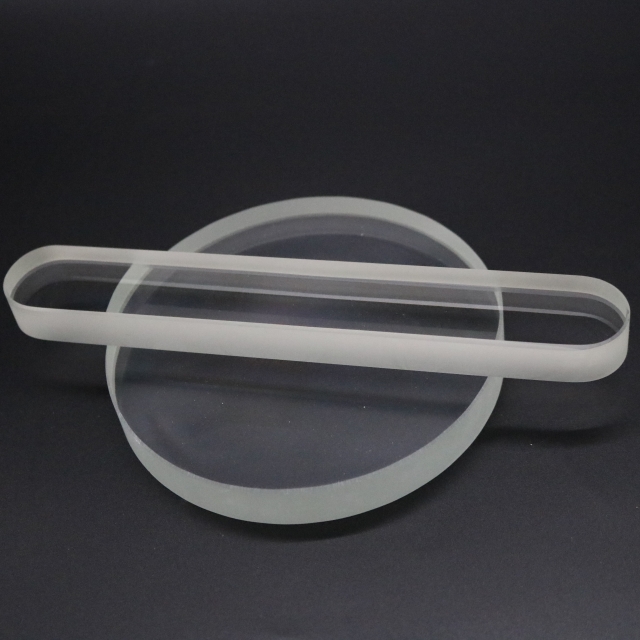
Boiler Application Focus: For steam and high-pressure applications, relying on a Flat Boiler Tempered Sight Glass Sheet Plate ensures optimal pressure distribution, thermal shock resistance, and compatibility with reflex or bi-color gauge housings.
Total Cost of Ownership (TCO): Upfront material costs are negligible compared to the downtime and safety risks of specifying inadequate materials (e.g., standard soda-lime vs. engineered borosilicate/quartz).
Procurement errors often happen when terminology mismatches occur across departments. You might read one term in a legacy boiler manual. You might see a completely different term in a modern manufacturer catalog. This confusion causes costly ordering mistakes. "Sight glass" acts merely as a broad umbrella category. Various industry niches use highly specific synonyms depending on the physical context.
We can categorize these terms by their physical application to clear up the confusion:
Boiler & Level Synonyms: Water gauge, gauge glass, liquid level gauge, reflex gauge. Engineers use these terms when measuring fluid height.
Vessel & Tank Synonyms: Viewing window, inspection glass, sight port, light port. A sight port allows side observation. A light port provides top illumination.
Piping Synonyms: Sight flow indicator, sight piece. These monitor active fluid movement through a closed pipe.
You also need to understand structural distinctions. An assembly differs greatly from a modern window. An assembly sandwiches a transparent piece between rubber or graphite gaskets. This legacy design leaves the unit vulnerable to installation torque. If a technician over-tightens the bolts, the unit shatters. Conversely, a modern window uses fused glass-to-metal technology. The metal ring absorbs mounting stress directly. It completely isolates the delicate optics from mechanical pressure.
We must transition from general definitions to specific high-risk applications. Steam boilers represent the ultimate test for observation components. In these aggressive environments, selecting the right geometry and material saves lives. A basic tubular design cannot withstand modern industrial demands.
Engineers prioritize specific design traits for valid, physics-based reasons. Circular or flat plate designs distribute pressure much more evenly than tubular variants. Flat plates remain absolutely essential for reflex gauges. Reflex gauges utilize internal prismatic grooves. They refract light so liquid appears black and vapor appears silver. This high-contrast visibility prevents operator error. Flat surfaces also support modern bi-color gauges used in high-end boiler setups.
Mechanical prestressing or tempering changes internal stress mechanics completely. The tempering process heats the material near its melting point. Manufacturers then cool it rapidly. This rapid cooling locks in intense compressive stress. Tempered glass handles compressive stress incredibly well. This internal strength prevents catastrophic blowouts under immense steam pressure.
Manufacturers can easily cut and seat a specialized Flat Boiler Tempered Sight Glass Sheet Plate within heavy-duty boiler gauge armatures. This adaptable shape allows for robust face-sealed or sidewall-sealed configurations. It delivers reliable visibility without compromising the pressure vessel integrity.
Upgrading your plant components requires a structured, objective approach. We developed a six-dimension matrix to guide your evaluation process. You can map these specific features directly to operational outcomes.
Thermal Shock Parameter: Resistance depends on thermal conductivity, tensile strength, expansion coefficient, and Young's modulus. Lower expansion materials prevent cracking during sudden temperature swings. Borosilicate and quartz excel here.
Pressure Limits & Sealing Mechanisms: Compare your sealing options carefully. Face-sealed units remain highly vulnerable to over-tightening during maintenance. Sidewall-sealed units offer better protection because they compress internal plastic packing instead.
Corrosion Resistance: Caustic environments eventually cause materials to fog or thin out. Fused glass offers high general durability. However, it remains vulnerable to edge spalling in strong corrosive chemical applications. Tension concentrates exactly at the metal boundary.
Abrasion: Particulate wash quickly degrades softer surfaces. Fast-moving fluids act like sandpaper. You require harder surfaces like quartz or sapphire over standard plastics.
Temperature Ceilings: Standard materials fail at extreme heats. Soda-lime maxes out just under 300°F. Borosilicate acts as the dependable industry standard for medium heat. Quartz and sapphire handle temperatures exceeding 500°F easily.
Physical Impact: Safety compliance often dictates extra physical protection. You might need external protective shields. You might require structural metal rings or laminated multi-layer options to meet strict local safety codes.
Below is a summary chart comparing these essential metrics for quick reference. When your facility requires a high-performance upgrade to meet strict safety codes, selecting a professional Flat Boiler Tempered Sight Glass Sheet Plate ensures high-heat structural stability and prevents sudden temperature cracking in mission-critical environments.
Evaluation Dimension | Budget/Standard Option | High-Performance Upgrade | Operational Outcome |
|---|---|---|---|
Thermal Shock | Soda-Lime Glass | Borosilicate / Quartz | Prevents sudden temperature cracking |
Sealing Mechanism | Face-Sealed | Sidewall-Sealed | Reduces installation breakage risk |
Temperature Ceiling | < 300°F Limit | > 500°F Limit | Ensures high-heat structural stability |
Physical Protection | Exposed Tubular Tube | Armored Flat Plate | Complies strictly with safety codes |
Plant managers often focus purely on initial purchase prices. You must compare the long-term lifecycle of premium glass versus budget alternatives. Total Cost of Ownership (TCO) reveals the true financial impact of your specification choices. A cheap part becomes expensive if it causes weekly downtime.
Many facilities consider the popular plastic trade-off. Polycarbonate or acrylic sight tubes offer distinct shatterproof benefits. The food processing and pharmaceutical industries heavily favor them to prevent contamination. These plastic options also feature very low initial procurement costs. They seem like a smart budget choice initially.
However, you need a harsh reality check. Plastics degrade rapidly in heavy industrial settings. They carry strict temperature limits under 300°F. They show high susceptibility to physical scratching. Hard water causes severe mineral scaling. Harsh chemicals cause irreversible chemical clouding. This rapid degradation leads to much higher replacement frequencies. You will face increased maintenance labor costs over time. High-quality tempered glass outlasts these budget plastics significantly. The upfront savings of acrylic vanish entirely after just one unplanned maintenance shutdown.
Managing boiler equipment requires strict operational discipline. You must address the daily realities of heavy equipment maintenance. Ignoring component degradation invites severe safety incidents. Operational reality demands proactive monitoring.
Glass thinning from boiler water erosion remains completely inevitable. Hot steam slowly dissolves the silica matrix over time. You must require regular caliper checks from your maintenance team. Safety protocols also mandate built-in automatic ball valves. If a sudden blowout occurs, these internal valves immediately restrict steam escape. They stop boiling water from flooding the facility floor.
Follow this standard operating procedure for safe component replacement:
Step 1: Isolation. Always safely open the drain cocks first. Then, securely close the upper and lower valves. Verify zero pressure before proceeding further. Never attempt repairs on a live pressurized vessel.
Step 2: Removal. Clear any protective outer rods. Carefully loosen the retaining nuts. Safely rock the gaskets free to remove the compromised plate or tube. Do not force or strike the housing.
Step 3: Measurement & Seating. Ensure exact dimensional matching when installing your new replacement. Measure the precise distance between the valve faces. When seating your new unit, avoid uneven bolt torque. Always tighten nuts in a star pattern to distribute stress perfectly.
Your purchasing decision requires clear shortlisting logic. First, verify the physical application context. Determine if you are monitoring a boiler, a chemical tank, or an active pipe. Next, calculate your exact maximum thermal and pressure loads. Finally, select the optimal material based on those calculations rather than relying on outdated legacy names.
Audit your current boiler gauges immediately for signs of thinning or fogging.
Transition from legacy gasket assemblies to modern fused window technology wherever applicable.
Consult a certified manufacturer for custom flat plate dimensions to ensure a perfect seal.
Standardize your procurement terminology across your engineering and purchasing departments.
A: Sight glass serves as the broad umbrella term for any transparent viewing window in an industrial system. A gauge glass specifically refers to tubular or flat components used for accurate liquid level measurement in boilers and tanks.
A: Flat reflex models use internal grooves to create optical refraction. This refraction makes liquid appear dark black and vapor appear bright silver. This high-contrast reading drastically reduces operator error in critical boiler applications.
A: You must rely on condition-based monitoring. Replace the unit immediately when you detect scratches, cloudiness, or measurable thinning. Standard practice also dictates replacement during annual boiler shutdowns. Never reuse old gaskets or previously clamped pieces.
A: Strictly no. Standard window glass poses fatal physical risks. It cannot withstand thermal shock or extreme pressure. Sudden temperature changes cause immediate, explosive blowout. You must strictly use tempered borosilicate, quartz, or specialized fused materials.


