
Please Choose Your Language
Views: 0 Author: Site Editor Publish Time: 2026-05-20 Origin: Site


Industrial glass specifications often cause unnecessary confusion on the procurement floor. Many buyers mistakenly assume "3.3" acts merely as a brand name or a vague marketing claim. In reality, it represents a highly specific engineering standard. This number directly denotes the material's coefficient of linear thermal expansion (CTE).
Purchasing managers and plant engineers must understand this crucial technical distinction. You cannot afford to use incorrect glass materials in high-stress environments. Installing substandard glass in chemical processing plants or petroleum storage facilities inevitably leads to catastrophic failure. These material failures create severe safety hazards and trigger profoundly costly operational downtime.
This guide serves as a comprehensive technical and commercial evaluation framework. We will help you confidently select high-borate glass materials. You will learn exactly how to source reliable components like sight glasses and level indicators. Our framework ensures you avoid dangerous industrial misapplications while optimizing your long-term maintenance budgets.
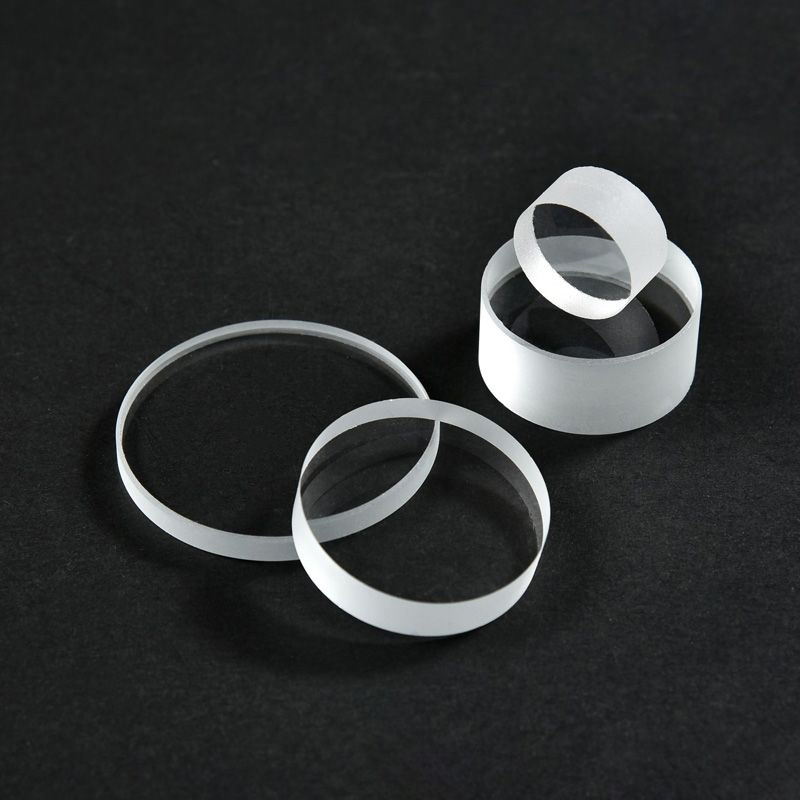
The "3.3" meaning: Refers directly to a linear thermal expansion coefficient of 3.3 × 10⁻⁶ K⁻⊃1;, making it highly resistant to rapid temperature changes.
Standardization: True 3.3 borosilicate must comply with ISO 3585, containing approximately 80% silica and 13% boron oxide.
Industrial Application: It is the industry standard for high-risk environments, specifically serving as the safest option for 3.3 borosilicate glass for oil tanks, chemical reactors, and pressurized pipelines.
TCO vs. Initial Cost: While upfront costs are higher than soda-lime or traditional glass, the total cost of ownership is offset by extreme chemical inertness, zero-degradation visibility, and a near-zero failure rate under thermal shock.
To evaluate industrial glass properly, you must first examine its exact material composition. True 3.3 borosilicate relies on a rigorous non-alkaline-earth formulation. Manufacturers produce it using approximately 80% silica, 13% boron oxide, 4% sodium or potassium oxide, and 2-3% aluminum oxide. The high concentration of boron oxide fundamentally alters the molecular structure. Boron atoms bond tightly, creating a rigid three-dimensional structural network. This atomic architecture grants the material its exceptional strength and stability.
This structural network directly influences the Coefficient of Thermal Expansion (CTE). The CTE metric measures how much a material expands or contracts during temperature fluctuations. A CTE of 3.3 × 10⁻⁶/°C means the glass barely moves when heated or cooled. You can compare this to standard soda-lime glass, which carries a much higher CTE of roughly 9.0 × 10⁻⁶/°C. Standard glass expands rapidly under heat, causing internal stresses to build up until the material shatters.
However, claiming a low expansion rate is not enough for industrial procurement. The material must meet authoritative benchmarks to earn the 3.3 classification. True 3.3 glass must comply strictly with ISO 3585 general requirements. This standard mandates exceptional mechanical homogeneity. It also requires the complete absence of refractory inclusions or structural defects. When you specify ISO 3585 compliant material, you guarantee predictable, safe performance across extreme industrial applications.
Industrial facilities face a constant business problem regarding pressurized vessels. Oil tanks require continuous visual monitoring. Operators rely on sight glasses and tubular level gauges to check fluid levels constantly. However, adding a glass viewing window inherently introduces a potential weak point into the tank wall. You must ensure visual monitoring never compromises the structural integrity of the entire vessel.
Thermal shock resistance serves as the primary defense against structural failure. Oil heating processes, chemical system flushes, and external weather extremes subject tank windows to severe temperature swings. Authentic 3.3 glass withstands sudden temperature differentials of up to 166°C (330°F) without fracturing. This extreme thermal resilience prevents explosive ruptures during routine plant operations.
Beyond physical strength, optical clarity and precision matter immensely for daily operations. This material boasts a very low refractive index of approximately 1.47. It does not yellow, cloud, or degrade after prolonged petrochemical exposure. Your operators will maintain accurate fluid inspections and level readings for decades.
Furthermore, EHS (Environment, Health, and Safety) managers strongly prefer this material due to its predictable fracture patterns. All glass can break under sufficient physical impact. However, if failure occurs, 3.3 glass tends to break into larger, blunt fragments. Standard glass typically explodes into hazardous, jagged shards. Using 3.3 Borosilicate Glass For Oil Tanks drastically minimizes personnel risk during rare accidental impacts.
Industrial glass must survive constant exposure to aggressive fluids. This material delivers unparalleled hydrolytic and acid resistance. Authoritative industry standards consistently verify its chemical inertness across varied testing conditions.
We can map its capabilities against specific ISO standards. It achieves ISO 719-HGB 1 classification for hydrolytic resistance at 98°C. It also meets the stricter ISO 720-HGA 1 standard for hydrolytic resistance at 121°C. For aggressive industrial acids, it comfortably passes ISO 1776 testing protocols.
Test Category | Standard Metric | Performance Grade |
|---|---|---|
Hydrolytic Resistance (98°C) | ISO 719 | HGB 1 (Highest Rating) |
Hydrolytic Resistance (121°C) | ISO 720 | HGA 1 (Highest Rating) |
Acid Resistance | ISO 1776 | Class 1 (Negligible Erosion) |
These ratings translate to flawless performance in harsh petrochemical environments. The material remains highly impervious to organic compounds and damaging halogens like chlorine and bromine. It shrugs off continuous exposure to most industrial acids, even when system temperatures exceed 100°C.
However, responsible engineering demands transparent trade-offs. You must understand where 3.3 glass fails to prevent dangerous misapplications. High concentrations of hydrofluoric acid will dissolve the silica network rapidly. Hot phosphoric acid and strong boiling alkaline solutions will also cause gradual surface erosion over time. You should always map your exact chemical flow against these known limitations before finalizing any installation.
Designing pressurized systems requires a strict adherence to realistic mechanical limits. Engineers usually reference EN 1595 standards when calculating design values and safety margins for industrial glass. Glass acts as a non-ductile material. Unlike steel, it cannot deform to relieve concentrated stress. Fortunately, 3.3 borosilicate maintains a highly reliable elastic modulus (E = 64 kN mm⁻⊃2;) and a stable Poisson's ratio (0.2).
When engineering these systems, you must carefully balance tensile versus compressive strength expectations. Compressive strength proves highly forgiving in industrial setups. The material safely handles a compressive load ratio of K/S = 100 N mm⁻⊃2;. Tensile strength, however, demands much more caution.
Account for Surface Conditions: The ultimate tensile strength technically ranges from 35 to 100 MPa. However, even microscopic surface scratches drastically lower the maximum breaking stress.
Isolate Metal Contacts: Never allow bare metal flanges to touch the glass surface directly. Always utilize compliant, thermally rated gaskets to distribute clamping forces evenly.
Monitor Installation Torque: Over-tightening retaining bolts creates uneven stress concentrations. Follow exact manufacturer torque sequence specifications to prevent immediate cracking.
These mechanical limits also dictate broader installation realities across your plant. Because the material possesses such a remarkably low expansion rate, long pipeline runs become easier to manage. You will require far fewer expensive temperature compensation mechanisms throughout the facility. This inherent stability ultimately drives down overall engineering complexity.
Procurement teams frequently debate direct costs versus long-term value. Soda-lime (regular) glass is undeniably cheaper upfront. Yet, standard glass suffers terribly from repeated thermal fatigue and rapid chemical etching. Plant managers who buy soda-lime windows inevitably face frequent, mandatory replacements.
You must frame your ROI calculations around downtime mitigation. Unplanned plant shutdowns obliterate annual maintenance budgets. A ruptured standard sight glass on an active oil tank halts entire production lines instantly. It also triggers massive, heavily regulated environmental cleanup efforts. Using premium 3.3 Borosilicate Glass For Oil Tanks acts as a permanent insurance policy against catastrophic thermal-shock ruptures.
Many buyers attempt to compromise by using tempered standard glass. While tempered glass boasts excellent physical impact resistance, it remains inherently vulnerable to thermal stress. A rapid temperature drop will still shatter a tempered soda-lime window. Conversely, 3.3 borosilicate is inherently immune to thermal stress. It stands as the only mathematically correct choice for high-heat industrial fluid monitoring.
Feature | Soda-Lime Glass | Tempered Glass | 3.3 Borosilicate Glass |
|---|---|---|---|
Initial Cost | Low | Medium | High |
Thermal Shock Limit | ~40°C | ~100°C | ~166°C |
Chemical Inertness | Poor | Moderate | Excellent |
Total Cost of Ownership | High (Frequent failures) | Medium (Thermal risks) | Low (Decades of lifespan) |
The industrial market is unfortunately saturated with misleading product claims. Evaluating suppliers requires intense vigilance. You must ensure you are not accidentally purchasing lower-grade "traditional" borosilicate. Lower-grade formulations contain higher levels of sodium and calcium. This alteration artificially lowers manufacturing costs but significantly raises the material's CTE.
To secure authentic material, your procurement team must enforce a strict verification process. Do not accept verbal assurances from distributors. Always demand traceable, empirical proof of compliance.
Request Material Certificates: Force suppliers to provide active documentation proving compliance with ISO 3585 and ISO 719 standards.
Verify Quality Control Limits: Ask for AQL (Acceptable Quality Limit) testing results, specifically referencing standards like MIL-STD-105E to ensure zero structural defects.
Perform Physical Verification: Authentic material feels slightly heavier and denser at 2.23 g/cm³. Look for specific "3.3" laser etchings or markings on all industrial viewing components.
When finalizing your orders, communication remains critical. Advise your engineering teams to share exact operational parameters with the glass manufacturer. Provide them with precise continuous operating temperatures, peak sudden temperature differentials, maximum expected pressure loads, and specific chemical exposures. The manufacturer will use these exact inputs to calculate the necessary glass thickness to keep your facility safe.
The "3.3" designation represents a meticulous engineering standard built for uncompromising thermal and chemical stability. It is never just a convenient marketing term. Understanding its underlying atomic structure and strict ISO compliance metrics helps you avoid disastrous purchasing mistakes.
For critical infrastructure, specifically fluid level monitoring in the oil, gas, and chemical sectors, no other material suffices. Upgrading to 3.3 Borosilicate Glass For Oil Tanks offers the only specification that perfectly balances personnel safety, optical clarity, and strict regulatory compliance.
Audit your facility's current vessel sight glass specifications to identify any outdated soda-lime installations.
Download official technical data sheets detailing ISO 3585 compliance for your procurement archives.
Contact a specialized industrial glass manufacturer to perform a comprehensive evaluation of your current operational pressure limits.
Update your internal procurement manuals to strictly ban the use of standard tempered glass in high-temperature fluid monitoring zones.
A: The material reaches its softening point at 820°C and melts at approximately 1650°C. However, typical sustained industrial working temperatures sit much lower. Manufacturers usually rate standard installations for continuous use between 450°C and 500°C. Your exact safe working limit depends heavily on vessel pressure, glass thickness, and your specific mounting flange design.
A: The elevated cost stems from extreme manufacturing difficulty. Melting raw materials at 1650°C requires specialized, high-energy furnaces. Additionally, the glass must undergo rigorous, intentionally slow annealing processes in specialized kilns to remove microscopic internal stresses. This prolonged production cycle significantly increases baseline manufacturing costs.
A: Yes, it boasts excellent intrinsic compressive strength. However, its actual operational pressure rating depends entirely on engineering geometry. Engineers calculate safe pressure limits based on the overall thickness of the glass, the unsupported viewing diameter spanning the opening, and the rigidity of the gasket and mounting flange design.
A: Yes, it remains a brittle material. It will break if struck by a direct, heavy physical impact. However, it fractures into larger, safer, blunt pieces. More importantly, it is nearly impossible to shatter purely via standard industrial thermal shock, provided the temperature change stays within its rated 166°C sudden-change limit.


