
Please Choose Your Language
Views: 0 Author: Site Editor Publish Time: 2026-05-19 Origin: Site


Industrial pipelines and pressure vessels operate under extreme conditions. They silently handle volatile chemicals, immense pressures, and severe temperature fluctuations. Engineers rely on sight glasses as vital observation windows into these closed systems. They allow operators to monitor flow dynamics, color shifts, and phase changes safely. However, you must view these instruments not just as passive windows. They act as critical structural components. A poorly specified viewport introduces a catastrophic failure point into an otherwise robust pressurized vessel.
Selecting the right unit mitigates severe safety risks. It prevents unplanned operational downtime. Proper specification ensures accurate fluid monitoring without ever compromising vessel integrity. Choosing the correct assembly requires careful evaluation. You must balance structural geometry, material science, and your specific operational constraints. In this guide, you will learn how shape dictates pressure limits. We will explore why fused materials significantly outperform conventional glass. Finally, you will learn how to apply a rigorous framework for specifying the ideal component for your chemical or mechanical process.
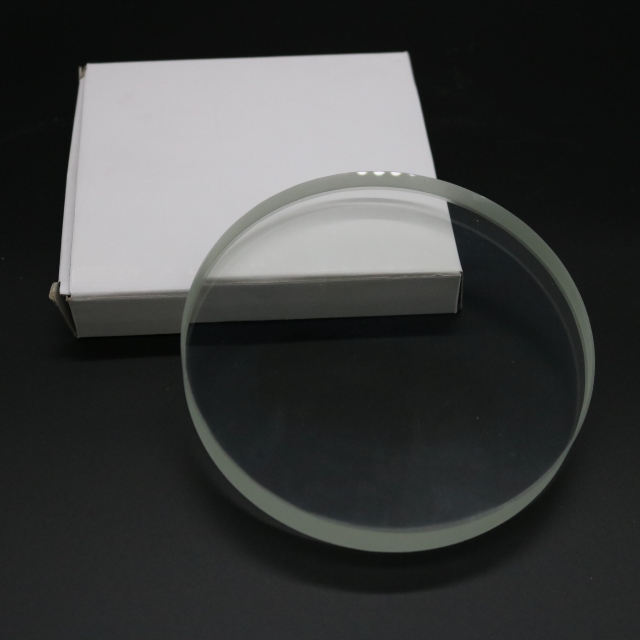
Geometry dictates pressure limits: A professional Round Sight Glass is the industry standard for high-pressure vessels because circular geometry evenly distributes mechanical stress, eliminating the dangerous stress concentrators found in rectangular or tubular alternatives.
Tensile vs. Compressive stress: Most glass failures occur in a tensile mode; fused glass-to-metal sight glasses utilize compressive stress to eliminate catastrophic blowouts.
Material dictates lifespan: Selecting between borosilicate, quartz, or soda-lime glass depends on calculating the specific thermal shock parameters and chemical abrasion limits of your process.
Total Cost of Ownership (TCO): Over-specifying upfront (e.g., fused borosilicate) drastically reduces maintenance costs, CIP/SIP downtime, and compliance risks in the long run.
The physical shape of a viewing window inherently dictates its mechanical limitations. Engineers must match the geometry to the specific fluid dynamics and pressure environments of their facility. The structural design you choose directly influences safety and performance.
Circular geometry represents the optimal shape for pressure resistance. In a pressurized vessel, mechanical stress seeks weak points. Rectangular windows contain corners. These corners act as dangerous stress concentrators. A circular design evenly distributes these forces across the entire perimeter of the assembly. This prevents localized stress fractures from forming during pressure spikes.
You must understand a critical performance metric here. The pressure capacity of a flat Round Sight Glass is directly proportional to the square of its thickness-to-diameter ratio. If you double the thickness of the glass, you quadruple its pressure resistance capability. Because of this predictable strength, engineers flange-mount or weld these directly into chemical reactors, industrial centrifuges, and high-pressure tanks.
Best Practices for Circular Assemblies:
Always verify the unsupported diameter before calculating pressure ratings.
Ensure mounting flanges are perfectly flat to prevent uneven bending forces.
Never reuse gaskets during routine maintenance.
Tubular sight glasses provide a 360-degree, continuous view of fluid dynamics. They excel when operators need to observe color, clarity, and overall flow rate from a distance. You typically install these vertically or horizontally within a pipeline framework.
However, this structural design comes with severe trade-offs. Tubular configurations are inherently limited by the tensile strength of the glass tube itself. The elongated surface area makes them highly vulnerable to external physical impact. Tool drops or accidental collisions easily shatter them. Therefore, they remain entirely unsuited for high-pressure or high-stress environments. You should restrict their use to low-pressure fluid transfer lines.
When monitoring liquid levels in tall tanks, you often use specialized level gauges. These fall into two structural categories: transparent and reflex.
Transparent Gauges: These utilize smooth glass on both sides. They provide complete, unobstructed visibility of the fluid. However, clear liquids like water often blend into the background. You must install strong backlighting assemblies to render clear liquids visible.
Reflex Gauges: This design solves the visibility problem for clear fluids. The glass utilizes prismatic grooves cut into the process-facing side. It relies on specific refraction principles. When light hits the vapor or gas area, the prisms reflect it back, making the area appear bright silver. When light hits the liquid, it absorbs the light, making the liquid appear dark. This creates a sharp, unmistakable meniscus line. They are highly effective for transparent fluids like water or specific oils.
Understanding how the glass integrates into the metal housing is paramount. The assembly method defines the safety margin of your system. It also dictates your long-term Total Cost of Ownership (TCO).
A conventional assembly relies on a simple mechanical mechanism. It features a loose glass disc clamped tightly between two metal rings. Compressible gaskets sit on either side of the glass to create a seal.
These simple windows carry significant implementation risks. They are highly susceptible to human error during routine maintenance. If a technician tightens the flange bolts unevenly, it introduces bending forces. This over-torquing leads directly to point-stress fractures. Furthermore, conventional assemblies remain prone to minor leaks under extreme thermal cycling. As temperatures fluctuate, the metal expands and contracts differently than the glass. This movement compromises the gasket seal.
The TCO impact is deceptive. Conventional units offer a lower initial purchase price. However, they generate higher long-term maintenance costs. You will face frequent gasket replacements, labor costs for careful torque procedures, and higher glass replacement frequencies.
Fused technology represents the high-performance standard in fluid monitoring. The manufacturing mechanism fundamentally alters the properties of the glass. The glass melts entirely inside a metal ring inside a specialized furnace. Because the metal features a higher thermal expansion coefficient, it shrinks aggressively around the glass during the cooling phase. This process places the glass disc in a state of constant "volumetric compression."
You evaluate this based on core material science. Glass materials are highly resistant to compressive forces. Conversely, they are incredibly weak against tensile forces. By locking the material in compression, a fused Round Sight Glass neutralizes dangerous tensile stresses. This engineering design makes catastrophic, sudden shatter virtually impossible. Even if the surface suffers a severe impact, the compression holds the web of cracks together. It prevents explosive blowouts.
The TCO impact here is excellent. Fused units command a higher initial cost. Yet, they remain effectively maintenance-free. They do not require careful bolt torquing protocols. They are ideal for toxic, highly corrosive, or sterile pharmaceutical processes where unexpected failure is unacceptable.
Feature / Metric | Conventional Assembly | Fused Assembly |
|---|---|---|
Stress State | Neutral / Prone to Tensile Bending | Volumetric Compression |
Human Error Risk | High (Uneven bolt torquing causes cracks) | Virtually None (Impervious to over-torquing) |
Catastrophic Blowout | Possible under extreme pressure/impact | Impossible (Maintains seal even if cracked) |
Initial Cost | Low | High |
Total Cost of Ownership | High (Frequent maintenance and replacement) | Low (Effectively maintenance-free) |
You cannot treat industrial glass as a generic commodity. Your selection process must evaluate specific engineering limits. Material failure happens when thermal expansion outpaces the material's elasticity.
Avoid generic claims made by low-end manufacturers. You must instruct buyers and engineers to evaluate materials based on hard data. You assess thermal shock resistance by analyzing three properties. First, look at thermal conductivity. Second, evaluate Young's modulus (stiffness). Finally, review the thermal expansion coefficients. A lower thermal expansion coefficient means the material resists cracking when subjected to sudden temperature drops, such as during cold-water washdowns of hot equipment.
Soda-lime is standard window glass. It remains highly cost-effective. However, you must limit its use to low-pressure, non-critical, and low-temperature applications. It typically fails at continuous temperatures above 300°F. More importantly, it possesses very poor thermal shock resistance. A sudden splash of cold water on a hot soda-lime window will shatter it instantly.
Borosilicate serves as the baseline for industrial reliability. It offers excellent resistance to sudden thermal shock. It also provides robust protection against chemical corrosion and mechanical abrasion. Borosilicate easily handles continuous operating temperatures up to 536°F. For most chemical, food, and energy applications, this material hits the perfect sweet spot of price and performance.
Some environments quickly destroy borosilicate. When operations exceed 536°F, you must upgrade to specialty materials. Quartz offers near-zero thermal expansion and withstands temperatures well over 1500°F. Sapphire provides extreme hardness and unmatched chemical resistance. You require sapphire when processing specific highly aggressive chemicals. Examples include hydrofluoric acid or hot caustic solutions, which rapidly etch and thin standard glass.
Glass Material | Max Temp (°F) | Thermal Shock Resistance | Chemical Resistance |
|---|---|---|---|
Soda-Lime | 300°F | Poor | Moderate |
Borosilicate | 536°F | Excellent | High |
Quartz | > 1500°F | Exceptional | High (vulnerable to HF) |
Sapphire | > 3000°F | Excellent | Extreme (resists HF/caustics) |
Beyond shape and material, you must adapt the viewport to industry-specific operational challenges. Different sectors face unique compliance and mechanical hurdles.
In pharmaceutical processing, hygiene dictates the engineering design. You must focus on quick-opening hinges. These allow rapid access for sampling. You also need clamp-on (Tri-Clamp) connections. Threaded connections create microscopic crevices. Tri-Clamps eliminate "dead legs" in the piping. Dead legs are stagnant areas where fluids stop moving and bacteria accumulate. In this sector, strict compliance with ASME BPE (Bioprocessing Equipment) standards remains absolutely mandatory.
Chemical towers processing substances like urea present a unique physics problem. Urea crystallizes rapidly if its temperature drops. Standard viewports act as heat sinks. They cool the fluid near the window, causing crystallization. This crystallization obscures the glass and creates false liquid level readings.
You solve this by specifying steam-jacketed bodies. These specialized housings circulate hot steam around the viewport to maintain consistent process temperatures. As a critical risk mitigation tactic, you should integrate isolation valves behind the window. Isolation valves allow technicians to perform on-the-fly glass replacement. They can shut the valve, replace the etched glass, and reopen it without ever shutting down the entire chemical tower.
Condition monitoring requires specialized oil sight glasses. Operators use these to detect internal machine degradation before catastrophic failure occurs. You evaluate these through a specific lens.
Bullseye Types: These provide a 3D view protruding slightly from the machine casing. They are excellent for spotting oil aeration and dangerous foam buildup.
Columnar / Bowl Types: You install these at the lowest drain point of the oil reservoir. Because water and debris are heavier than oil, they sink into this bowl. They remain excellent for capturing bottom sediment, emulsified water, and metal wear debris.
Do not guess when purchasing these components. Follow this rigorous framework to protect your personnel and equipment.
Pressure Rating Check: Start with your system's maximum limits. You must align the thickness-to-diameter ratio with both maximum operational pressures and potential spike pressures. Always calculate for the spike, not just the normal operating baseline.
Temperature Profile: Temperature impacts material elasticity. Calculate both the continuous operating temperature and the maximum thermal shock delta. The delta is the extreme difference during cleaning cycles (e.g., hot steam cleaning immediately followed by cold water rinses).
Process Fluid Compatibility: Analyze the chemical makeup. Match the glass type, gasket material (like PTFE or Viton), and housing alloy to the fluid's corrosivity and pH. For highly aggressive media, upgrade your housing from standard 316L stainless steel to Duplex stainless or Hastelloy.
Connection Methodology: Determine how the unit attaches to your system. Does the vessel require an ASME-compliant weld-on port? Do you need an ANSI bolt-on flange to match existing pipework? Does the environment demand a sanitary clamp for easy removal?
Shortlisting Logic & Next Steps: Advise your engineering team to lock in their pressure and temperature parameters first. Next, choose between fused or conventional designs based entirely on safety criticality. Finally, request exact spec sheets, material certificates, or CAD models for your Round Sight Glass from the manufacturer before finalizing the purchase. This systematic approach ensures the component perfectly matches your system’s operational demands.
A sight glass is never a generic plumbing commodity. It functions as an engineered fail-safe separating volatile processes from your personnel. Proper specification guarantees smooth operations and prevents disastrous facility accidents. When upgrading your equipment, remember these core takeaways:
Specify fused borosilicate for critical processes to gain the best balance of safety, visual clarity, and low TCO.
Never use tubular designs in high-pressure environments; rely on circular geometries to distribute stress safely.
Evaluate your thermal shock delta strictly to choose the correct glass material and prevent instant shattering during washdowns.
Eliminate dead legs in sanitary applications by insisting on flush-mounted, clamp-on designs.
Take action today by reviewing your current pipeline specifications. Consult directly with dedicated application engineers. Have them verify your dimensional constraints and thermal shock calculations before you proceed with any procurement.
A: A circular shape is structurally superior because it evenly distributes mechanical stress across its entire perimeter. Rectangular designs feature hard corners. These corners act as severe stress concentrators. Under high pressure, forces gather at these weak points, leading to cracks and explosive failure. Round geometry eliminates this risk.
A: Most failures stem from tensile stress. Glass is inherently weak against bending forces. In conventional models, over-torquing the flange bolts creates uneven tension, cracking the disc. Additionally, severe thermal shock, sudden impact, and long-term chemical etching or thinning gradually compromise the structural integrity until it bursts.
A: You should inspect them daily for leaks, cloudiness, or physical damage. Perform a detailed scratch evaluation during scheduled maintenance. Deep scratches severely weaken the material. Conventional models require frequent gasket and glass replacements. Fused models last significantly longer, often matching the lifespan of the equipment itself.
A: Quality components adhere to strict global engineering codes. You should look for compliance with DIN 7080 (for borosilicate glass plates) and BS 3463. Additionally, housings and connections must align with ASME (American Society of Mechanical Engineers) standards for pressure vessels and ANSI guidelines for flange dimensions.


