
Please Choose Your Language
Views: 0 Author: Site Editor Publish Time: 2026-05-19 Origin: Site


Modern industrial boilers rely heavily on digital sensors for continuous remote monitoring. These advanced systems provide critical data to central control rooms. However, physical liquid level measurement remains an absolute necessity. Digital systems can fail during power outages or sudden sensor malfunctions. A physical Boiler Water Level Gauge Glass serves as the ultimate fail-safe against catastrophic system failures. You need direct, mechanical visual confirmation to ensure safe continuous operation.
These critical components endure extreme operating conditions daily. They must constantly withstand high internal pressure, highly corrosive alkaline mediums, and severe thermal shock. Such harsh environments dictate precise material and design selection. A simple mistake in component procurement can lead to dangerous blowouts or facility downtime.
This article provides a comprehensive technical evaluation of different gauge types. We will explore material compatibilities, compliance standards, and essential maintenance protocols. You will learn how to make informed procurement decisions to protect your facility equipment and personnel.
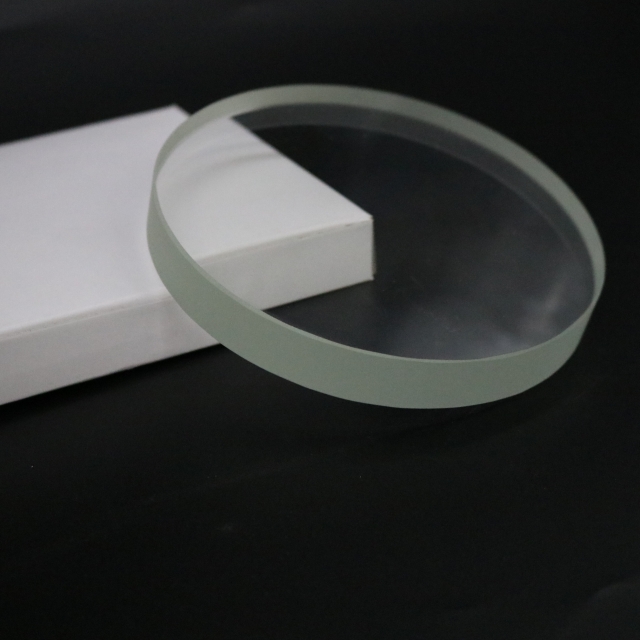
Design Variations: Tubular designs suit low-pressure environments (<600 PSI), while armored, reflex, and transparent gauges are engineered for high-pressure/high-temperature extremes (up to 4000 PSI).
Material Limits: Standard Borosilicate 3.3 handles up to 280°C; Aluminosilicate pushes limits to 450°C. Mica shields are non-negotiable for high-alkaline environments.
Systemic Variances: Acknowledging thermodynamic "gage glass error" (where glass readings may show lower than actual drum levels due to temperature/density differences) is critical for accurate operation.
Safety & Maintenance: Routine blowdown testing and strict adherence to replacement cycles prevent devitrification (cloudiness) and structural failure.
You might wonder why we still rely on physical glass viewing windows in an era of smart automation. The answer lies strictly in industrial safety codes. Regulatory bodies worldwide mandate physical sight glasses on steam-generating equipment. They provide non-electric, direct-displacement visual confirmation. If your facility loses total power, operators can still verify the drum water level instantly.
Maintaining the exact liquid level in a boiler drum requires a delicate balance. Deviating from the optimal level introduces severe, immediate risks to the facility.
Low-Level Risks: If the water drops below the minimum safe line, you face dry-firing. This exposes the internal heating surfaces directly to combustion temperatures. The metal tubes can quickly melt, warp, or completely rupture. In worst-case scenarios, introducing cooler water to superheated dry metal causes a massive, instantaneous steam expansion. This often results in a catastrophic boiler explosion.
High-Level Risks: Overfilling the boiler presents an equally destructive threat. High water levels cause liquid carryover into the main steam piping. Steam systems move vapor at extremely high velocities. When dense slugs of water enter these lines, they act like battering rams. This phenomenon, known as water hammer, can destroy valves, shatter pipe joints, and ruin expensive downstream steam turbines.
Physical gauges do not compete with remote digital sensors; they complement them. Electronic sensors utilize indirect measuring methods, such as differential pressure mapping or ultrasonic bouncing. Over time, these electronic sensors drift out of calibration. Visual gauges act as the baseline baseline truth. Maintenance engineers use the direct physical reading to routinely calibrate and verify indirect remote level indicators.
Selecting the correct design depends entirely on your system's operating pressure, fluid type, and visual requirements. We categorize the standard Boiler Water Level Gauge Glass into four primary structural types. These include tubular, reflex, transparent, and armored designs, each engineered to address specific thermodynamic challenges within the steam drum environment.
Tubular level gauges consist of simple cylindrical glass tubes. Manufacturers often install a "Red Line" backing behind the tube. The water acts as an optical lens, magnifying the red stripe to create a highly visible, thick red column. This makes it incredibly easy to read fluid levels in dark boiler rooms.
However, you must restrict tubular designs to low-pressure applications. They typically max out safely under 600 PSI. The cylindrical shape leaves the glass highly vulnerable to outward tensile stress and accidental mechanical impact. You should never use them in high-pressure utility steam applications.
Reflex gauges offer exceptional visibility without needing external backlighting. They feature internal prismatic grooves cut into the inner glass face. This design utilizes the basic principles of light refraction.
When external light hits the vapor phase, the prisms reflect it completely. The empty space appears silvery-white to the operator. When light hits the liquid phase, the fluid absorbs it, making the water appear solid black. This sharp contrast makes liquid level identification instant and unambiguous. They safely operate up to 40 Bar (approx. 580 PSI) and 260°C. However, you cannot use them to observe fluid color, identify liquid interface layers, or monitor highly viscous media that might clog the grooves.
When you need to see exactly what is happening inside the fluid, you need transparent gauge glasses. This heavy-duty construction features two flat glass plates clamped on opposite sides of a metal chamber. Operators typically mount an illuminator on the rear side to shine light directly through the fluid.
This application proves necessary for observing specific fluid characteristics. If your system handles dirty mediums, high-purity chemicals, or requires monitoring a distinct liquid-liquid interface, transparent gauges provide the required clarity.
Extreme conditions require extreme engineering. Standard glass fails under tension. Fused sight glasses solve this fundamental weakness. During manufacturing, engineers thermally fuse the glass directly into a metal ring. As the metal cools, it shrinks around the glass. This process utilizes massive bulk compression to eliminate vulnerable tensile stress zones within the glass pane.
You will find armored and fused sight glasses primarily in petrochemical plants and extreme high-pressure utility boilers. They can safely withstand incredible systemic pressures, often rated up to 4000 PSI without structural failure.
Gauge Glass Design Selection Chart
Gauge Type | Primary Mechanism | Max Pressure Limit | Best Application Scenario |
|---|---|---|---|
Tubular | Cylindrical tube, red-line optics | < 600 PSI | Low-pressure commercial boilers, clear water. |
Reflex | Prismatic light refraction | 40 Bar / 580 PSI | Clean liquids requiring high-contrast visual readings. |
Transparent | Dual-pane, rear illumination | Variable (Depends on build) | Dirty systems, checking fluid color or impurities. |
Armored/Fused | Bulk compression fusing | Up to 4000 PSI | Extreme utility steam, petrochemical environments. |
The structural housing only provides half the solution. The actual transparent medium must chemically survive the fluid it touches. Selecting the wrong glass base leads to rapid deterioration and hazardous blowouts.
Borosilicate 3.3 serves as the broad industry standard for sight glass manufacturing. It offers excellent general chemical resistance, particularly against acidic environments. It also handles sudden temperature changes well. You can safely deploy standard borosilicate glass in applications ranging from -100°C up to +280°C.
When operating temperatures push beyond 280°C, borosilicate begins to fail. Engineers choose Aluminosilicate glass for these demanding environments. It boasts superior thermal shock resistance and higher operating temperature limits. You can safely use Aluminosilicate up to 450°C, making it the ideal choice for high-pressure superheated steam.
Boiler water requires careful chemical treatment to prevent internal rust. Operators frequently add sodium hydroxide (NaOH) or potassium hydroxide (KOH) to raise the water's pH level. This creates a severe chemical threat to glass.
Standard silicate glass suffers rapid corrosion in high-alkaline environments. The hot alkaline water chemically etches the silica out of the glass. This causes devitrification, thinning, and eventual explosive failure. The solution involves installing high-grade Mica shields. Mica is a naturally occurring, transparent mineral. You install a PH14-rated Mica shield (capable of handling up to 300°C) on the wetted side of a transparent gauge. It acts as a sacrificial barrier, completely preventing alkaline glass degradation.
Proper material selection means nothing if you install the unit incorrectly or misinterpret its readings. Industrial regulators strictly dictate how we position these gauges.
The American Society of Mechanical Engineers (ASME) mandates strict minimum height requirements for physical sight glasses. They base these rules on the internal geometry of the specific boiler.
For fire tube boilers, the lowest visible point of the Boiler Water Level Gauge Glass must sit a minimum of 76mm above the highest internal fire tube.
For water tube boilers, the gauge must sit at least 50mm above the highest water tube heating surface.
These hard rules ensure operators have a built-in safety buffer. Even if the water level drops completely out of the sight glass, the operator still has a brief window to shut down the burners before critical dry-out occurs.
Operators frequently panic when the physical sight glass reading shows a lower liquid level than the central control room data. Usually, this is not a malfunction. It represents a thermodynamic phenomenon known as gage glass error.
You must understand the thermodynamic density gap. The water sitting in the external gauge column cools down because it is exposed to ambient room air. Water inside the main boiler drum remains extremely hot. Cooler water is physically denser than hotter water. Because the external column and internal drum share the same pressure system, the cooler, heavier external water sits lower to balance the lighter internal water.
This impact scales with pressure. At extreme pressures, such as 13,800 kPa, the visual level can read up to 20% lower than the actual drum level. Well-trained operators must mentally account for this offset during daily operations.
When sourcing replacement parts, you must match them strictly to international dimensional matrices. Common frameworks include DIN 7081, JIS B8211, and BS 3463. You must order exact matches regarding Length (L), Width (W), and Thickness (T). Changing the thickness to save money alters the burst pressure rating and violates compliance codes.
Total Cost of Ownership (TCO) relies heavily on disciplined maintenance. Neglecting your Boiler Water Level Gauge Glass invites catastrophic failure. You need robust predictive maintenance strategies.
Engineers must perform daily visual diagnostics. You should actively look for early signs of failure. Cloudiness indicates chemical devitrification and means the glass has lost structural integrity. You must also check for micro-scratches or slight gasket weeping. Shining a bright flashlight from behind the glass can reveal early refractive anomalies or internal thinning before a blowout occurs.
Glass weakens over time under continuous thermal stress. You cannot wait for it to break before replacing it. Define practical replacement timelines based on operating severity.
Low-Risk Applications: Clean water, low pressure (under 150 PSI). Replace every 3 to 5 years.
High-Risk Applications: High pressure, superheated steam, or corrosive alkaline environments. Replace strictly every 6 to 12 months.
Replacing a gauge glass requires extreme caution. Follow this high-level Standard Operating Procedure (SOP) framework to ensure safety.
System Isolation: Tightly close the upper steam valve and lower water valve. Open the bottom blowdown drain valve to completely clear the column of pressurized steam and boiling water.
Component Removal: Carefully remove the housing nuts. Discard the old glass and all old sealing materials. You must maintain absolute strictness against reusing old glass or compressed gaskets. Old glass takes a permanent structural "set" and will shatter if tightened into new fittings.
Cutting Measurements (For Tubular Types): Never force a glass tube into place. It causes immediate binding stresses. Measure the exact distance between the upper and lower valve faces. Then, add the specific stop casting allowance provided by the valve manufacturer to find your total cut length.
Torque Sequence: Tighten new retaining nuts gently and evenly, alternating sides. Over-torquing instantly cracks the new installation.
Selecting the right boiler water level gauge glass requires a systematic evaluation process. You must carefully match your specific pressure limits to the correct structural design. You need to evaluate your fluid transparency needs to choose between reflex or transparent builds. Furthermore, understanding the chemical composition of your boiler water ensures you select the correct base material, whether that is Borosilicate, Aluminosilicate, or a Mica-shielded setup.
Take action today to protect your infrastructure. Facility managers and procurement engineers should audit their current sight glasses against DIN and ASME standards. Look for signs of devitrification. Consult with a certified industrial glass supplier to see if your facility would benefit from application-specific material upgrades to increase overall safety and reduce long-term maintenance costs.
A: Cloudiness indicates devitrification. High-alkaline boiler water chemically etches the silicates right out of the glass structure. This weakens the unit significantly and poses a severe blowout risk. You need to install a transparent Mica shield on the wetted side of the glass to protect it from alkaline corrosion.
A: A red-line gauge glass features a painted red stripe down the back of a tubular glass cylinder. The water inside acts as an optical lens. It magnifies the red stripe, making the water level appear as a highly visible, widened red column. It significantly improves contrast in poorly lit boiler rooms.
A: We strongly advise against this. Precise thickness requirements tie directly to the calculated burst-pressure ratings under DIN and ASME standards. Installing a thinner glass reduces its ability to handle internal pressure and thermal shock, turning the gauge into a deadly explosion hazard.
A: Blowdown testing clears accumulated debris. The procedure involves alternately isolating and flushing the steam and water sides out through a drain valve. This violent flushing action proves the piping is completely free of sludge or scale blockages, ensuring the water level you see is accurate.


