
Please Choose Your Language
Views: 0 Author: Site Editor Publish Time: 2026-05-19 Origin: Site


Pouring boiling water into standard glass often triggers a sharp, dangerous shattering sound. However, brands explicitly market borosilicate glass as highly thermal-shock resistant. You might wonder if pouring 100°C (212°F) water into these vessels is genuinely safe. Technically, it is safe. Yet, practical safety depends heavily on material grade, structural integrity, and proper handling protocols.
You cannot treat all glassware equally. This guide unpacks the material science behind heat-resistant glass. We evaluate various commercial and industrial use cases where temperature extremes matter. You will also discover verifiable criteria for safely selecting and handling these specialized glass components. By understanding the underlying physics, you can prevent sudden breakages. We provide clear standard operating procedures to extend product lifespans. Let us explore how borosilicate survives boiling water and what you must do to ensure maximum safety.
Thermal Threshold: High-quality borosilicate safely withstands rapid temperature changes up to 165°C (329°F), easily handling boiling water.
The Physical Trade-off: To achieve high thermal resistance, borosilicate is often manufactured thinner than standard soda-lime glass, making it less vulnerable to heat but more susceptible to physical impact drops.
Non-Toxic Guarantee: Pure, uncolored borosilicate is chemically inert, preventing the sodium leaching found in soda-lime glass and the chemical off-gassing (BPA/phthalates) associated with plastics.
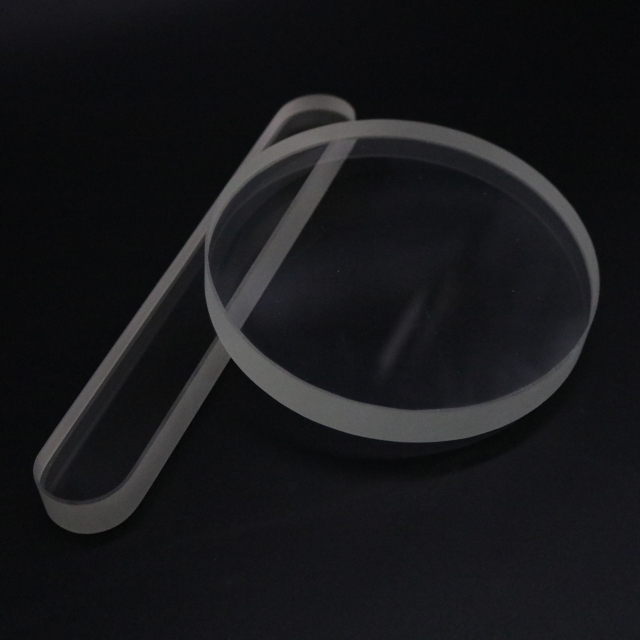
Precision Sourcing Matters: For custom or industrial applications, specifying exact formats—such as a Round Borosilicate 4.2 Glass Sheet—ensures predictable thermal performance and compliance with laboratory standards.
When you pour boiling water into standard glass, you create immediate physical stress. The inner layer of the vessel rapidly expands as it absorbs heat. Meanwhile, the outer layer remains cool and static. This differential expansion creates massive internal tension. Eventually, the material exceeds its tensile strength. The glass literally tears itself apart. We call this destructive physical stress thermal shock.
True borosilicate alters this physical dynamic completely. Manufacturers add a crucial ingredient called boron trioxide to the silica mixture. This chemical addition fundamentally changes how the material reacts to heat. It gives the glass a naturally low coefficient of thermal expansion (CTE). Simply put, the material does not expand very much when heated. A lower CTE means both the inside and outside layers expand at a slow, uniform rate. This uniformity effectively eliminates the internal tension that destroys standard glass.
However, you should not rely solely on vague marketing claims. True laboratory-grade borosilicate always complies with strict standardized benchmarks. Industry professionals look for ISO 3585 and ASTM E438 certifications. These global standards provide verifiable proof of thermal stability. They guarantee the material can survive rapid temperature shifts of up to 165°C without fracturing. When you buy certified materials, you purchase measurable, predictable physics.
Before standardizing on a material, you must evaluate its health profile and structural integrity. You need to compare borosilicate directly against common alternatives to understand its true value.
To clarify these differences, we have mapped out the core performance dimensions in the evaluation chart below.
Material Type | Chemical Stability (Toxicity) | Thermal Resistance | Best Use Case |
|---|---|---|---|
Soda-Lime Glass | Slowly leaches sodium ions in acidic or high-heat environments. | Poor. Fails under sudden temperature shifts (thermal shock). | Cold beverages, disposable consumer packaging. |
Standard Plastics | Degrades under boiling heat. Risks shedding BPA and microplastics. | Varies, but risks chemical off-gassing above 80°C. | Cold storage, non-consumable utility applications. |
Borosilicate Glass | 100% inert. Non-porous microscopic layer prevents all leaching. | Excellent. Survives extreme, rapid heat cycling safely. | Hot liquids, laboratory environments, industrial engineering. |
Compared to soda-lime glass, borosilicate offers vastly superior chemical resistance. Standard glass behaves poorly in acidic or high-heat environments. It slowly leaches sodium ions into the liquid. Borosilicate prevents this entirely. It features a non-porous microscopic protective layer. This layer provides ten times the chemical decomposition resistance of standard alternatives.
When evaluated against plastics, the health benefits become even clearer. Plastics degrade rapidly under boiling temperatures. They risk shedding harmful microplastics into your environment. Heated plastics also release BPA and phthalates. Borosilicate remains completely inert. It stays flavor-neutral and chemical-free, regardless of how often you boil water in it.
You must evaluate tinted glassware carefully. Pure, clear glass remains the safest baseline for consumer and commercial use. Some legacy manufacturers utilize heavy metals to achieve deep, rich colors. They might use cadmium to create vibrant reds. They might add lead to increase optical brilliance. Always prioritize extreme optical clarity over aesthetic colors. You want to avoid heavy metal contamination entirely. Clear glass guarantees material purity.
While consumers know borosilicate from coffee mugs and tea pitchers, its highest value lies elsewhere. The material scales perfectly into demanding commercial and industrial procurement. Chemical engineering facilities rely on it heavily. Manufacturers use it for 3D printing beds. Custom laboratory apparatuses require its precise thermal stability.
For industrial applications, you must specify exact material metrics. Generic labels do not suffice. You need specific formats to ensure predictable outcomes. For instance, sourcing a Round Borosilicate 4.2 Glass Sheet provides absolute certainty for custom builds. This exact specification ensures the buyer receives a distinct thermal expansion coefficient of 4.2 x 10^-6/K.
Why does this specific metric matter? It optimizes the component for repeated extreme temperature cycling. You can expose it to sudden heat repeatedly without causing warping or fracturing. This predictability is mandatory for laboratory standards and high-heat engineering tasks.
High-grade borosilicate requires a higher upfront procurement cost, but you must calculate the Total Cost of Ownership (TCO). Standard materials fail quickly under thermal stress, whereas investing in a professional Round Borosilicate 4.2 Glass Sheet eliminates these issues. Its extended lifecycle drastically reduces replacement costs, minimizes equipment downtime, and safeguards your operational budgets in the long term, making it the most cost-effective choice for precision engineering.
We must debunk a dangerous implementation myth. Many people assume "heat-resistant" means "indestructible." This assumption is completely false. Borosilicate has a distinct physical vulnerability.
To achieve high thermal resistance, manufacturers often blow and formulate the glass much thinner than standard soda-lime variants. A thinner profile optimizes heat transfer. It reduces overall weight. However, this design trade-off creates a severe weakness. The material becomes highly brittle under mechanical stress.
It survives a 100°C boiling water pour easily. Yet, clinking it too hard against a granite countertop can fracture it. Dropping it on a hard floor will shatter it instantly. You trade mechanical impact resistance for extreme thermal stability. You must handle these vessels accordingly.
Some users believe heat-resistant glass "ages" over time. They think it slowly loses its thermal resistance. This is a myth. The chemical structure does not degrade from heat alone. However, physical abuse does cause long-term vulnerability.
Abrasive cleaning creates cumulative micro-scratches along the surface. These invisible scratches act as stress concentrators. When the glass heats up, thermal tension focuses directly on these weak points. Eventually, this leads to sudden failure under heat. The material did not age; it was physically compromised by poor maintenance.
You can minimize liability and prevent product loss by following specific handling protocols. Implementing actionable safety guidelines ensures your glassware survives extreme environments. Follow these five standard operating procedures.
The Gradual Pour: Never dump a massive volume of boiling water into a vessel instantly. Pour the water slowly. This practice allows the inner wall to adjust its temperature gradually. It reduces the sudden shock of extreme heat.
The Spoon Hack: Place a metal spoon inside the container before pouring. Metal acts as an excellent thermal conductor. It absorbs the initial wave of heat shock. This simple trick dramatically reduces the inside-outside temperature delta.
Pre-Warming: Advise all users to pre-rinse the glass. Use warm tap water before introducing 100°C liquid. This pre-warming step allows the entire glass structure to expand slightly beforehand. It creates a safe thermal buffer.
Avoid Thermal Down-Cycling: Establish a strict rule against rapid cooling. Never place a freshly boiled glass container onto a cold surface. A wet marble countertop will crack it immediately. Similarly, never rinse a hot vessel with cold water. Let it return to room temperature naturally.
Maintenance Bans: Prohibit the use of steel wool. Ban abrasive scouring pads entirely. These cleaning tools compromise the surface integrity. They create the micro-scratches that eventually cause sudden thermal failure. Use only soft sponges and mild detergents.
We can categorically state that it is safe to put boiling water into authentic borosilicate glass. The physics guarantee this safety, provided the material remains pure and structurally undamaged. Its low coefficient of thermal expansion makes it the definitive choice for handling 100°C liquids.
When shortlisting suppliers, you must apply strict verification logic. Always verify their ISO and ASTM certifications. Prioritize clear, transparent glass over colored variants to avoid heavy metal risks. Specify exact dimensions and coefficients for industrial applications. For example, explicitly sourcing a Round Borosilicate 4.2 Glass Sheet ensures predictable, standard-compliant performance for custom engineering builds.
Your next steps should focus on rigorous vetting. Encourage your procurement teams to evaluate detailed supplier documentation. Request testing samples and evaluate their mechanical durability before committing to bulk procurement. Proper sourcing and careful handling will maximize the lifespan of your investments.
A: No, it does not shatter, provided it is high-quality borosilicate. Its low thermal expansion handles the heat seamlessly. However, it must not be subjected to extreme, immediate cold right afterward. Physical micro-scratches from past damage can also cause unexpected failures.
A: While it withstands boiling water beautifully, direct open-flame or dry-heating without a liquid buffer remains risky. Direct flames cause uneven, localized stress that leads to breakage. You should always use heat diffusers if the manufacturer requires them.
A: Look for extreme optical clarity. Standard soda-lime glass usually displays a faint green tint along its thick edges. True borosilicate lacks this green tint. It also features a noticeably lower refractive index, giving it a distinct, pure appearance under direct light.
A: No. Moving directly from 100°C down to 4°C pushes the absolute limits of the material. Even with a high thermal shock threshold of approximately 165°C, this practice risks structural failure over time. You must always allow the vessel to reach room temperature first.


