
Please Choose Your Language
Views: 0 Author: Site Editor Publish Time: 2026-05-19 Origin: Site


Walking through a home goods store reveals a maze of contradictory claims about glass cookware. Some brands confidently market their "heat-resistant glass" as completely stove-safe. Meanwhile, industry giants like Pyrex explicitly ban any direct flame use on their modern packaging. This confusion stems from a fundamental misunderstanding between standard heat resistance and true thermal shock resistance. When exposed to the uneven, direct heat of a stovetop burner, even robust materials face immense physical strain. Failing to recognize this distinction often leads to dangerous kitchen accidents and shattered pots. We designed this guide to provide an evidence-based, manufacturer-level evaluation of glass under extreme stovetop conditions. You will learn to separate marketing myths from actual thermal physics. Ultimately, this knowledge ensures you choose and use the right materials safely.
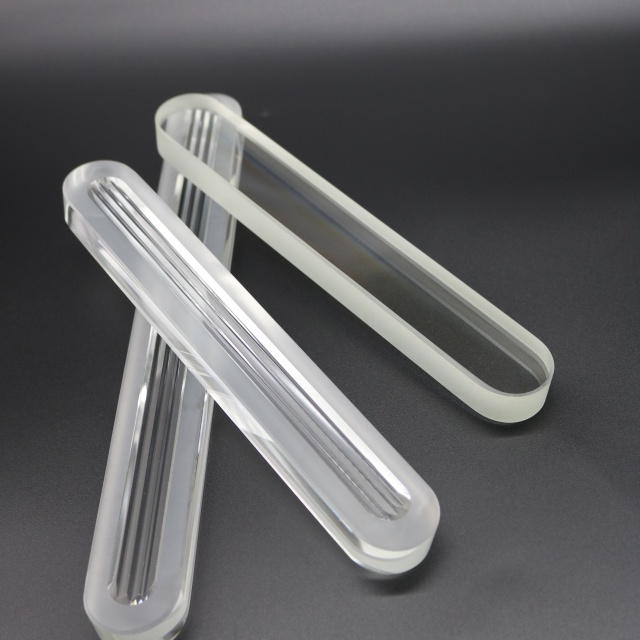
Direct flame is a high-risk scenario: High borosilicate glass should never be used directly on a naked gas flame or electric coil without a heat diffuser due to thermal gradients.
Material confusion is widespread: Most "direct-fire safe" glass cookware on the market is actually Glass-Ceramic (e.g., Corning's Visions), not borosilicate.
Industrial vs. Kitchen application: The material handles extreme heat effortlessly in controlled environments (like Boiler Mirror High Borosilicate Glass Sheets), but stovetops lack this heat uniformity.
Health ROI justifies the effort: Despite the operational limits, its chemical inertness, zero-leaching properties, and non-porous nature make it superior to coated metal alternatives.
Glass acts as a powerful insulator. It conducts heat poorly compared to metals like copper or aluminum. A centralized gas flame or a glowing electric coil generates intense localized hot spots on the bottom of a pot. The surrounding glass areas remain significantly cooler. We call this phenomenon a thermal gradient. The intense heat causes the molecules in the localized hot spot to vibrate and expand rapidly. However, the cool neighboring molecules refuse to yield. This clash creates a massive physical burden across the structural matrix.
This drastic temperature difference triggers uneven expansion across the material structure. Internal stress forces build rapidly inside the glass wall. Metal pans merely warp or discolor under similar abuse. They possess the ductility to bend and stretch. In contrast, glass succumbs to these internal pressures by undergoing catastrophic, sudden shattering. The rigid molecular structure simply cannot stretch to accommodate the localized swelling. It snaps instantly once the tension exceeds its mechanical limits.
We must look beyond the flame itself to understand the full "sink-to-stove" reality. The danger often originates long before heating begins. Daily use introduces micro-scratches into the surface. Stirring vigorously using metal spoons creates invisible faults. These tiny imperfections severely weaken structural integrity. They act as stress concentration points where fractures initiate. Sudden temperature drops amplify the danger exponentially. For example, adding cold water to a scorching pan or resting it on a damp countertop practically guarantees failure. Consumers often blame the heat, but rapid cooling actually delivers the fatal blow.
Placing a cold glass pot directly onto a pre-heated high-flame burner.
Setting a hot glass pan down on a wet granite or tile countertop.
Using abrasive steel wool pads to scrub off baked-on food, creating micro-scratches.
The term "heat-resistant glass" acts as a confusing umbrella in the cookware industry. Buyers easily fall into costly mis-specifications. We need to clearly separate the two primary materials dominating this space. Understanding their fundamental differences saves money and prevents dangerous accidents.
High borosilicate glass features a specific Coefficient of Thermal Expansion (CTE). It successfully endures sudden temperature differences ranging from 120°C to 150°C. You will find it performs exceptionally well in baking ovens or when boiling liquids. However, it remains highly vulnerable to the localized heat of a naked stovetop flame. The CTE is low, but it is not zero. The material still expands enough to fracture under targeted, uneven heat.
Engineers originally developed glass-ceramic (often known as Pyroceram) using advanced aerospace technology. Glass-ceramic easily endures thermal shifts exceeding 500°C. When you see true "open flame" products advertised, they utilize this specific composite. Corning's famous Visions line represents a classic example. The crystalline structure actively prevents thermal expansion almost entirely. It can move from a freezing environment directly to a roaring flame without fracturing.
If your business requirements or personal cooking habits demand direct, unprotected flame contact, glass-ceramic stands out as the only viable category. Let us examine how these two distinct categories compare head-to-head.
Evaluation Criteria | High Borosilicate Glass | Glass-Ceramic (Pyroceram) |
|---|---|---|
Thermal Shock Limit | 120°C – 150°C | 500°C+ |
Direct Open Flame | High Risk (Requires Diffuser) | Fully Safe |
Transparency | Crystal Clear | Often Amber or Slightly Opaque |
Best Use Case | Oven baking, boiling, laboratory | Stovetop braising, direct-fire cooking |
To truly understand material limits, we must examine extreme industrial applications. Factory environments push glass far beyond typical kitchen stress levels. Chemical engineers regularly subject transparent vessels to continuous, blistering heat. These commercial use cases reveal the true potential of the material.
Engineers frequently rely on a Boiler Mirror High Borosilicate Glass Sheet to monitor internal furnace conditions. This specialized component survives extreme, continuous industrial heat without shattering. We also see similar resilience in a secondary Boiler Mirror High Borosilicate Glass Sheet used for high-pressure chemical reactors. These viewing windows endure hundreds of degrees of blistering thermal energy for years. They maintain perfect optical clarity while holding back dangerous internal pressures.
These industrial components succeed because they comply with strict ISO 3585 and ASTM E438 standards. The heating environment remains highly controlled. Systems utilize oil baths or precision heating mantles to deliver uniform, gradual temperature increases. The entire surface area warms simultaneously. No cold spots exist to create dangerous tension. The thermal expansion happens evenly across the entire molecular grid.
The underlying material itself proves incredibly robust. It handles high temperatures flawlessly. The primary failure point on a home stovetop involves the delivery method of the heat. The localized flame distribution ruins the integrity, not any inherent weakness in the glass. Proper heat management unlocks industrial-grade durability right in your own home kitchen.
You face a non-negotiable requirement if you insist on stovetop use. You must employ a metal heat diffuser. Radiator plates or wire mesh inter-layers effectively transform localized hot spots into safe, uniform ambient heat. They act exactly like the industrial heating mantles mentioned earlier. Skipping this hardware invites disaster.
Understanding your specific stovetop technology dictates your safety protocols. Different heating elements transfer energy in drastically different ways.
Stove Type | Compatibility Risk | Mandatory Action |
|---|---|---|
Gas Stoves | Moderate Risk | Requires a heat diffuser. Utilize low-to-medium heat only. |
Electric Coil | Extreme Risk | Highest risk for thermal shock due to on/off cycling. Diffuser strictly required. |
Induction Cooktops | Incompatible | Inherently incompatible unless manufactured with an encapsulated magnetic base. |
Gas requires a heavy cast-iron or aluminum diffuser plate. You must utilize low-to-medium heat settings exclusively. The flames should never lick the sides of the vessel. Electric coils present the absolute highest risk for thermal shock. The constant on/off cycling of glowing coils wreaks havoc on insulation materials. A high-quality diffuser remains strictly required here. Never place the glass directly on the bare metal coil. Glass is entirely non-magnetic. It remains inherently incompatible with induction ranges. Manufacturers must encapsulate a magnetic stainless-steel base into the glass bottom to make it work. Do not attempt to use bare glass on an induction pad.
Never heat an empty pot: Always ensure food or liquid covers the base entirely.
Avoid boiling dry: Evaporating all liquid causes temperatures to spike instantly, shattering the vessel.
Pre-layer the bottom: Coat the surface using water, broth, or cooking oil before turning on the burner.
Use proper utensils: Rely exclusively on wooden, nylon, or silicone spatulas to prevent structural micro-fissures.
Manage cooldowns gradually: Allow the pot to cool naturally on the stove grate before moving it to a sink.
Why should anyone choose borosilicate if it demands a heat diffuser and strict handling rules? The answer lies in unparalleled purity. Modern consumers demand absolute food safety. Businesses catering to health-conscious buyers need materials free from toxic baggage.
The material boasts total chemical inertness. Non-stick coatings eventually degrade, raising serious PFAS and PTFE contamination concerns. Reactive metals like cast iron or aluminum often alter acidic foods like tomatoes or citrus. Conversely, borosilicate guarantees zero heavy metal leaching. It remains entirely lead and cadmium-free. It never causes flavor cross-contamination. You can brew delicate herbal tea immediately after boiling a spicy curry. The non-porous surface absorbs absolutely nothing.
Buyers enjoy high durability against chemical corrosion. The dense surface resists scratching effectively when handled properly. You unlock an indefinite lifespan if you rigorously follow thermal shock protocols. This careful maintenance yields a significantly higher long-term Total Cost of Ownership (TCO) than constantly replacing peeling coated pans. Industrial decision-makers rely on this same longevity when selecting a Boiler Mirror High Borosilicate Glass Sheet for critical observation ports. A single well-maintained glass vessel outlasts dozens of cheap non-stick alternatives, making it a superior investment in both safety and performance.
You must inspect the optical clarity carefully. Look for high-transparency, completely colorless glass. Buyers should actively avoid vintage pieces or highly pigmented cheap glass. These older or unverified items may contain toxic heavy metal oxides used for tinting. True premium material appears crystal clear without any greenish hue at the edges.
Shoppers often assume thicker glass provides better protection. Thicker isn't always better for stovetops. Uneven wall thickness actually exacerbates dangerous thermal gradients. A thick base paired with thin walls creates massive internal stress during heating. Look closely for precision manufacturing and highly uniform dimensions. Consistent thickness ensures heat travels evenly throughout the entire structure.
B2B buyers sourcing new cookware lines must demand rigorous supplier documentation. B2C consumers upgrading their home kitchens should expect the same transparency. Mandate lab results confirming a true high-borate composition. This usually requires 80% silica and 13% or more boron trioxide. Always verify these specs before finalizing any procurement. Do not accept generic "heat resistant" labels. Insist on clear laboratory certifications.
High borosilicate glass is not inherently safe for naked, unprotected stovetop flames due to its thermal expansion limits under uneven heat. The rigid molecular structure cannot handle localized hot spots. However, it can be used safely with the disciplined application of a heat diffuser and strict temperature management. We encourage you to audit your current glass cookware today. Identify exactly whether your collection features soda-lime, borosilicate, or glass-ceramic. Finally, invest in proper heat diffusers to protect your kitchen assets and maximize the health benefits of this incredibly pure material.
A: No. Electric coils create severe hot spots. The constant on-and-off cycling of the heating element induces rapid thermal stress. A metal wire mesh or a solid diffuser plate is mandatory to protect the glass from shattering.
A: Modern standard Pyrex is often tempered soda-lime glass. This material prioritizes drop-resistance over thermal shock resistance. Official brand guidelines explicitly ban any stovetop use. Placing it over a burner guarantees failure due to massive thermal gradients.
A: Absolutely not. The rapid temperature swing will instantly exceed its 120°C–150°C thermal shock threshold. This extreme transition results in immediate, explosive failure. Always allow the glass to reach room temperature naturally before applying controlled heat.


