
Please Choose Your Language
Views: 0 Author: Site Editor Publish Time: 2026-05-18 Origin: Site


People often ask if high borosilicate glass is actually real glass. Yes, it certainly is real glass. However, material scientists structurally engineered it for extreme environments. In these harsh settings, standard glass would catastrophically fail. High-stress industrial operations demand exceptionally robust monitoring tools. Pressurized boilers and chemical reactors represent prime examples. In these demanding locations, standard glass sight-windows pose a massive safety and operational risk. Rapid temperature shifts often trigger severe thermal shock. This physical reaction leads to sudden and dangerous shattering.
To solve this, manufacturers integrate boron trioxide into the glass matrix. This critical addition alters the fundamental molecular structure. It shifts the material from a fragile household commodity into a heavy-duty industrial necessity. You will learn exactly how this chemical variation ensures survival in the field. We will explore its continuous high-heat applications. We will also uncover why heavy industry relies on it daily to maintain safe operations.
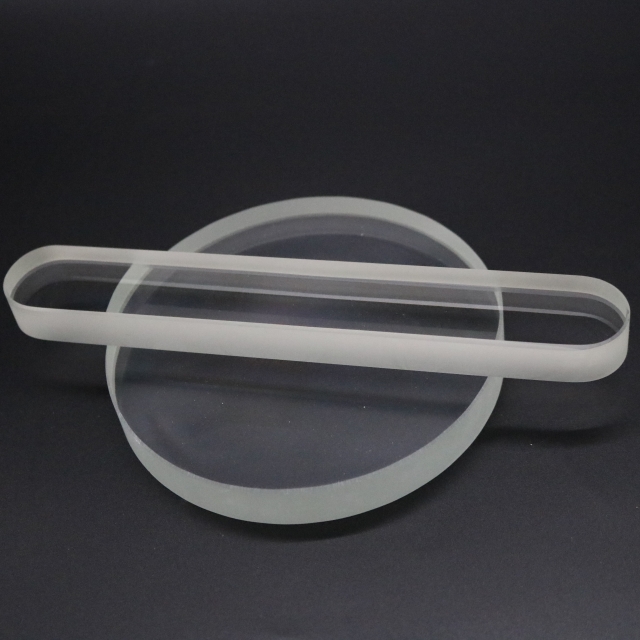
High borosilicate glass contains 12–13% Boron Trioxide (B2O3), fundamentally changing its thermal and chemical resistance compared to everyday soda-lime glass.
It operates safely under thermal shock differentials of up to 170°C (330°F) with an exceptionally low thermal expansion coefficient (approx. 3.3 × 10⁻⁶ K−1).
For industrial applications, specifying a Boiler Mirror High Borosilicate Glass Sheet significantly reduces Total Cost of Ownership (TCO) by minimizing maintenance downtime and replacement frequency.
Authentic material procurement requires verifying ISO 3585 and ASTM E438 (Type I, Class A) compliance to avoid counterfeit or mixed-material risks.
Understanding industrial glass requires looking at its molecular foundation. Everyday glass, known as soda-lime glass, relies on inexpensive fluxes like soda ash. These fluxes lower the melting point and make the glass easy to shape. Unfortunately, they also weaken the final product against heat. High borosilicate glass abandons this cheap formula. Instead, manufacturers substitute traditional fluxes with 12 to 13 percent Boron Trioxide. This specific chemical acts as a structural shield. It tightly binds the silica network together. This tight bond prevents the material from expanding rapidly when exposed to sudden heat.
The physical parameters of this material highlight its industrial pedigree. Standard soda-lime glass melts easily at around 1400°C. In contrast, the robust lattice structure of borosilicate requires a blistering 1650°C (approximately 3000°F) to melt. This extreme manufacturing temperature demands specialized kilns and massive energy consumption. Furthermore, the thermal expansion coefficient sharply divides the two materials. High borosilicate expands at a rate of roughly 3.3 × 10⁻⁶ K−1. This figure is essentially one-third the expansion rate of regular soda-lime glass.
Engineers often need to verify material authenticity on the factory floor. You can perform a simple visual identification field test. Examine the raw edge of a thick glass sheet under natural light. Authentic high borosilicate often displays a faint yellowish tint along its cross-section. Regular soda-lime glass exhibits a distinct bluish-green edge. This quick color check helps procurement teams spot incorrect material batches before installation.
Property | Standard Soda-Lime Glass | High Borosilicate Glass |
|---|---|---|
Core Composition | Silica, Soda Ash, Lime | Silica, 12-13% Boron Trioxide |
Melting Point | Approx. 1400°C | Approx. 1650°C (3000°F) |
Thermal Expansion | High (~9.0 × 10⁻⁶ K−1) | Extremely Low (~3.3 × 10⁻⁶ K−1) |
Edge Color Profile | Bluish-Green | Faint Yellow/Clear |
Facility managers face significant business problems when specifying observation windows. Boiler sight glasses and fluid-level indicators operate in exceptionally hostile conditions. They face a punishing combination of high internal pressure, aggressive chemical mixtures, and rapid temperature swings. A standard viewing pane simply cannot survive these combined forces. Installing the wrong material immediately jeopardizes employee safety and facility integrity.
We must evaluate thermal shock resistance as our primary dimension. Standard glass shatters when exposed to a sudden temperature difference. Even heavy-duty tempered glass fails eventually in boiler environments. Tempered glass handles steady heat well, but it stores massive internal tension. If localized thermal stress occurs, tempered glass shatters violently into thousands of pieces. In stark contrast, a high-quality Boiler Mirror High Borosilicate Glass Sheet easily survives an instant 170°C temperature differential. It handles rapid cooling and direct heat applications without accumulating fatal internal stress.
Chemical inertness represents another crucial evaluation dimension. Industrial boilers often circulate highly acidic or alkaline fluids. Regular glass degrades over time under these conditions. High borosilicate possesses a completely non-porous structure. It does not leach impurities into industrial chemical batches. Furthermore, it firmly resists surface degradation from prolonged exposure to harsh boiler environments. This inert nature ensures chemical process purity remains uncontaminated.
Finally, optical clarity determines long-term utility. Boiler operators rely on precise visual monitoring to prevent system overflows or dry-fire scenarios. Inferior glass degrades quickly. It suffers from fogging, surface pitting, and mineral calcification. High borosilicate maintains its crystal-like transparency over years of continuous use. Operators can always accurately read fluid levels without struggling through a cloudy or scratched observation window.
Industrial safety protocols require strict risk mitigation regarding material toxicity. We must address the common "heavy metal" myth surrounding glass manufacturing. Many consumers and junior buyers mistakenly believe all durable glass contains toxic hardeners. You must clarify that authentic, clear high borosilicate glass contains zero lead, zero cadmium, and no toxic stabilizers. Its strength comes entirely from its molecular lattice, not from hazardous chemical additives.
Global certifications provide the baseline requirements for safe procurement. B2B buyers must navigate specific regulatory frameworks to ensure material authenticity. When auditing suppliers, procurement managers should mandate the following documentation:
ISO 3585 Standard: This is the recognized international standard for borosilicate glass 3.3. It dictates exact chemical resistance limits and thermal thresholds.
ASTM E438 (Type I, Class A): This standard specifies glass requirements for laboratory and industrial apparatus. It ensures the material performs predictably under severe chemical duress.
FDA or LFGB Certifications: Even in non-food boiler applications, these food-safe certificates prove the material leaches absolutely zero heavy metals under heat.
Buyers must remain alert regarding implementation risks. Counterfeit materials flood the global market. Warn your purchasing teams about colored or decorative "retro" glass. Some manufacturers claim these products hold high borosilicate status. However, they frequently introduce heavy metals like uranium to achieve a green tint or cadmium for a red tint. For boiler sheets and industrial sight windows, strictly transparent, un-tinted material is mandatory. Introducing tinted glass into high-heat industrial settings invites unnecessary regulatory scrutiny and potential health hazards.
Upfront capital expenditure often triggers hesitation among procurement teams. We must acknowledge the distinct cost drivers involved here. High borosilicate glass typically commands a 40 to 80 percent higher purchase price compared to soda-lime or standard tempered glass. This premium directly reflects the extreme energy demands of the manufacturing process. Running a specialized furnace at 1650°C requires massive fuel consumption and highly specialized refractory bricks. You are paying for an energy-intensive refinement process.
However, total cost of ownership (TCO) calculations paint a different picture entirely. Facility managers should evaluate two major TCO calculation factors:
Longevity versus Breakage Costs: Standard sight glasses fracture frequently. You must buy replacement parts constantly. You also pay skilled labor rates for maintenance crews to drain the system, swap the glass, and restart the machinery. Borosilicate drastically reduces these replacement costs due to its inherent immunity to thermal fracturing.
Operational Continuity: Catastrophic sight-glass failure stops a production line immediately. Halting a high-capacity boiler or chemical reactor line costs thousands of dollars per hour. Avoiding just one unplanned shutdown completely offsets the higher material price.
The value conclusion remains exceptionally clear. We must frame the higher initial purchase price as an essential operational insurance policy. Choosing a premium Boiler Mirror High Borosilicate Glass Sheet prevents a massive financial disaster tomorrow. You do not buy this glass merely for its visual appeal. You buy it to secure continuous facility uptime.
Procuring raw industrial materials involves severe implementation considerations. Not all suppliers possess the technical capability to produce flawless materials. Maintaining the precise chemical ratios required for true borosilicate is difficult. Furthermore, maintaining the extreme furnace temperatures evenly across a large batch requires sophisticated engineering. A slight drop in kiln temperature can introduce fatal micro-fissures into the glass sheets.
Engineers must apply rigorous supplier evaluation criteria. Do not accept initial product samples as guaranteed proof of quality. Instead, verify bulk supply consistency. Ask the supplier to provide batch-testing reports demonstrating consistent thermal shock resistance across multiple production runs. Check their documentation for comprehensive factory audits. Reliable manufacturers willingly share their ISO testing records and material safety data sheets (MSDS).
Furthermore, assess the supplier’s experience in secondary processing. Producing the raw material is only half the battle. Cutting the glass to fit specialized industrial equipment introduces immense stress. You must evaluate their proficiency in custom cutting and edge polishing for specialized Boiler Mirror High Borosilicate Glass Sheets. Improperly treated edges harbor invisible micro-fractures. When exposed to pressurized boiler heat, these edge fractures expand and cause massive panel failure. Ensure your chosen partner utilizes advanced CNC edge-polishing techniques to eliminate these hidden weaknesses.
High borosilicate glass transcends the common definition of "real" glass. It stands as a highly refined industrial iteration designed specifically for survival in environments where standard materials fail. By substituting traditional fluxes with boron trioxide, engineers created a molecular structure capable of ignoring severe thermal shock. Its complete chemical inertness and optical longevity make it an irreplaceable asset for continuous high-heat monitoring.
Engineers and procurement managers must take proactive steps to secure their facilities. Audit your current boiler glass specifications immediately. Identify any locations relying on standard tempered glass and schedule them for upgrades. Always request comprehensive material data sheets from your suppliers before issuing purchase orders. Finally, prioritize ISO-certified manufacturers for your next procurement cycle to ensure you receive authentic, hazard-free materials.
A: Yes, its extremely low thermal expansion coefficient allows it to withstand direct heat and rapid cooling without shattering. This characteristic makes it standard for lab environments and industrial boiler applications where extreme temperature exposure is routine.
A: No. Transparent borosilicate 3.3 glass is chemically inert. Health and safety panels recognize it as completely non-toxic and food/pharma-safe. It easily passes strict ASTM and ISO chemical resistance standards, ensuring no harmful impurities enter your process.
A: Historically, yes. Original Pyrex utilized a true high borosilicate formula. However, much of the modern consumer Pyrex manufactured in the U.S. today uses tempered soda-lime glass. For industrial and lab applications, you must explicitly specify "high borosilicate" materials rather than relying merely on a brand name.


