
Please Choose Your Language
Views: 0 Author: Site Editor Publish Time: 2026-05-18 Origin: Site


Have you ever hesitated before pouring a fresh kettle of boiling water into a cold glass vessel? The sudden, loud pop of shattering glass is a familiar nightmare for many home cooks and lab technicians alike. Standard kitchen glassware simply cannot survive rapid, intense temperature changes. Fortunately, high borosilicate glass is engineered specifically to withstand boiling water without fracturing. This exceptional durability stems from its incredibly low coefficient of thermal expansion. It effectively prevents the structural failure seen in cheaper materials.
You might be surprised to learn how these same chemical properties bridge everyday consumer use and extreme commercial applications. In this article, you will discover the underlying physics keeping your glassware completely intact. We will explore real-world industrial proof, compare alternative materials side-by-side, and share actionable best practices. These practical steps will help you maximize the daily lifespan of your heat-resistant containers.
Thermal Thresholds: Safely handles sudden temperature shifts (thermal shock) up to 165°C (330°F) and sustained temperatures up to 450°C.
Material Superiority: Contains >15% boron trioxide, which prevents the inner-to-outer wall expansion gap that causes standard glass to crack.
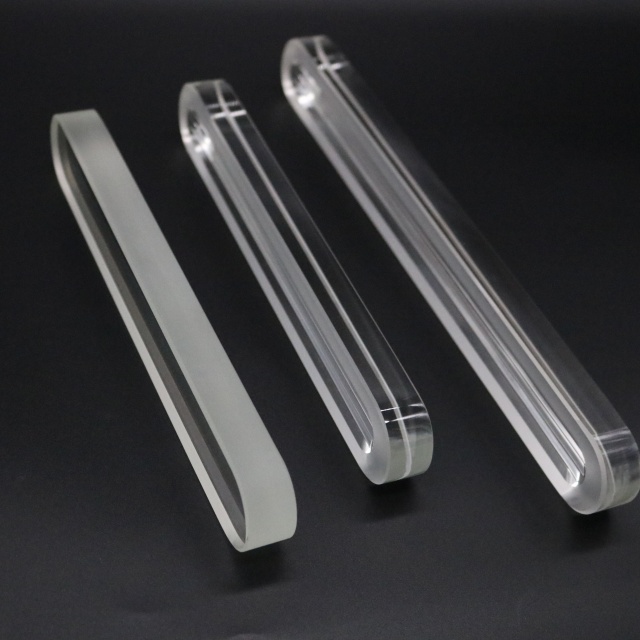
Industrial Proven: The standard material for Boiler Mirror High Borosilicate Glass Sheets due to its resistance to high-pressure steam and boiling water.
Health & Compliance: 100% non-toxic, highly resistant to chemical degradation (pH 6–10), and compliant with stringent ASTM and ISO standards.
Trade-off Reality: Maximized for thermal resistance, but physically more brittle against blunt impact than standard soda-lime glass.
Let us explore the molecular reality of thermal shock. Pouring boiling water into regular glass creates an immediate, violent crisis. The inner wall absorbs intense heat and expands rapidly. Meanwhile, the outer wall remains much cooler and rigid. This severe, uneven temperature difference generates immense internal stress. Soon, this internal stress exceeds the material's basic tensile strength. The result is catastrophic, instantaneous failure. You are left cleaning up dangerous shards.
High borosilicate glass completely sidesteps this problem through brilliant chemistry. Manufacturers add a significant amount of boron trioxide during the melting process. This essential ingredient chemically alters the glass structure. It creates a tighter, more resilient atomic lattice. This radically lowers the material's coefficient of thermal expansion. It shrinks the expansion rate to a mere fraction of what standard soda-lime glass experiences. When you introduce boiling water, the inner and outer walls expand at almost the exact same minimal rate. The destructive internal stress simply never builds up to critical levels.
However, we must also establish realistic performance boundaries. Your kitchen water boils safely at 100°C (212°F). High borosilicate handles this baseline easily. Yet, the material does have a maximum thermal shock delta. It safely tolerates a sudden, immediate temperature shift of roughly 165°C (330°F). Exceeding this exact delta will still cause stress fractures. You must respect this physical limit during daily operations.
Consumers sometimes doubt laboratory marketing claims about boiling kettles. If you need ultimate, undeniable proof, look directly to heavy-duty industrial boiler systems. These extreme environments require continuous, unforgiving exposure to superheated steam. Boiling water flows continuously under immense atmospheric pressure. Standard materials simply disintegrate or warp here.
Process engineers rely heavily on Boiler Mirror High Borosilicate Glass Sheet installations. Facilities install them as critical sight glasses in highly pressurized tanks. They allow human operators to monitor dangerous, boiling fluid levels safely from the outside. Any clouding or micro-fracturing here could lead to misreading levels. This could potentially cause catastrophic facility accidents.
Why do commercial buyers specify this exact material over standard tempered glass? The answer lies in long-term endurance. Tempered alternatives degrade predictably over time. Repeated heating and cooling cycles cause invisible, cumulative thermal fatigue. Eventually, tempered safety glass shatters unpredictably, endangering facility workers. Choosing a professional Boiler Mirror High Borosilicate Glass Sheet behaves entirely differently under duress. It offers a vastly superior continuous temperature rating. It easily survives constant exposure above 400°C. It also provides near-complete immunity to thermal fatigue.
Material selection always involves calculated, real-world trade-offs. Let us evaluate high borosilicate against common household and industrial alternatives.
First, consider traditional soda-lime glass. Soda-lime optimizes strictly for drop and impact durability. It survives accidental knocks against the sink beautifully. However, it requires much thicker walls to maintain this blunt-force strength. This necessary thickness becomes a fatal flaw under thermal stress. It traps heat unevenly. Borosilicate optimizes entirely for heat resistance. Because of this specific focus, manufacturers can produce much thinner, lighter constructions. These thin walls practically ignore thermal shock because heat transfers through them rapidly and evenly.
Next, compare it to household plastics and metals. Borosilicate boasts absolute, uncompromising chemical inertness. Upon initial contact with water, it forms a microscopic, durable protective layer. This invisible shield completely blocks harmful chemical leaching. Plastics, even modern ones, often risk dangerous BPA or phthalate degradation under high heat. High-grade glass eliminates this systemic worry entirely.
It also shines brilliantly in flavor preservation and heat retention. Glass acts as a relatively poor thermal conductor compared to steel or aluminum. It traps the heat safely inside your beverage or chemical solution longer than metal containers. At the same time, the exterior remains relatively safer to touch during operation.
Material Type | Thermal Shock Limit | Drop Durability | Chemical Inertness (Boiling) |
|---|---|---|---|
High Borosilicate Glass | ~165°C (Excellent) | Low to Moderate | Absolute (No leaching) |
Soda-Lime Glass | ~50°C (Poor) | High | Good |
Commercial Plastics | Variable (Warping risk) | Very High | Poor (BPA/Phthalate risk) |
Metals (Stainless Steel) | Extreme | Extreme | Moderate (Can alter flavor) |
Safety remains a top priority when handling any boiling liquids. Industry health experts widely recognize borosilicate as the ultimate "Baby Bottle Standard." It also serves as the global default material for demanding laboratory beakers and medical vials. Its strict non-toxicity makes it incredibly reliable for human consumption and sensitive chemical testing.
The material actively resists severe, long-term chemical degradation. In fact, it demonstrates ten times the chemical resistance of standard commercial glass. It effortlessly survives prolonged exposure to acidic solutions resting at pH 6. It performs equally well against harsh alkaline environments reaching up to pH 10.
Buyers must know how to verify true borosilicate authenticity. You can perform straightforward quality assurance tests yourself. Here are two key indicators to check:
Optical Clarity: Authentic material lacks the faint green tint commonly found along the edges of cheap soda-lime glass.
Refractive Index Test: Submerge the piece entirely in mineral oil. True borosilicate will seemingly disappear because the light refractive indices match perfectly.
For commercial procurement, always demand strict, verifiable compliance markers. Reputable suppliers will freely provide their manufacturing standard certifications. Look specifically for ISO 3585 and ASTM E438 designations before finalizing any purchasing contracts. These exact codes guarantee the presence of necessary boron trioxide.
Let us reframe the Total Cost of Ownership (TCO) for this material. You will face a noticeably higher initial procurement cost. However, this premium is heavily offset by a dramatically lower long-term replacement rate. You suffer far fewer thermal fractures over the years. You also avoid the cloudy chemical etching that ruins cheaper glass over time. The ROI becomes undeniably positive very quickly. Industrial users see this clearly when they invest in a durable Boiler Mirror High Borosilicate Glass Sheet for their critical infrastructure.
Despite its incredible resilience, operational risks still exist. The material is not completely immune to extreme human negligence. Moving a completely frozen container directly from a deep freeze (-20°C) to a rolling boil is highly dangerous. Rinsing a boiling-hot brewing vessel instantly under ice-cold tap water is equally risky. These sudden, violent actions can rapidly breach the 165°C maximum safety threshold.
You can easily maximize longevity by adopting simple, daily deployment best practices. Consider implementing these essential habits today:
Pre-warming: Always rinse your cold vessel lightly with warm tap water before introducing a full rolling boil. This softens the initial temperature jump.
Thermal Hacks: Place a standard metal utensil inside your container. Pour the boiling water directly over the metal spoon. The metal absorbs severe initial heat spikes quickly, protecting the glass floor.
Surface Management: Never place boiling-hot glassware directly onto cold stone countertops. The stone acts as a massive heat sink, rapidly pulling heat from the bottom. Avoid resting it on bare metal surfaces. Always use a wooden or silicone trivet to prevent localized thermal shock.
High borosilicate glass remains the definitive, safest choice for boiling water applications. Its structural performance is undisputed across both consumer kitchens and heavy industrial facilities alike. You no longer need to fear the sudden crack of failing glassware when preparing hot beverages or monitoring chemical processes.
To maximize your operational success, keep these action-oriented next steps in mind. Commercial buyers must prioritize verified suppliers immediately. Demand comprehensive ASTM E438 documentation and transparent thermal shock ratings upfront. Everyday consumers should strongly prioritize clear, unpainted borosilicate items. This actively avoids the hidden heavy metal risks often associated with cheap, decorative glass pigments. Finally, always respect the 165°C thermal shock limit. Utilizing gradual temperature transitions will drastically extend your product's daily lifespan.
A: It depends entirely on the exact temperature delta. As long as the specific temperature difference never exceeds 165°C (330°F), the glass remains structurally safe. A typical refrigerator sits around 4°C, so adding 100°C boiling water creates a 96°C jump. This falls well within safe limits. However, experts always recommend a gradual temperature transition. Mild pre-warming helps extend the product's ultimate lifespan.
A: The material's exceptionally high thermal resistance changes manufacturing rules. It allows producers to utilize much thinner walls safely. Thinner construction significantly reduces overall weight. More importantly, it further minimizes the dangerous internal-to-external temperature gap during heating. While highly thermal-shock resistant, you must handle it carefully. The thin profile makes it somewhat more susceptible to physical drop damage than traditional, thicker soda-lime glass.
A: No, it absolutely does not. High borosilicate stands out because it is completely chemically inert and non-porous. The material is strictly free of harmful BPA, dangerous lead, and toxic phthalates. It forms a microscopic shield upon contact with liquids. This makes it medically, structurally, and functionally safe for all high-temperature fluid containment needs.


