
Please Choose Your Language
Views: 0 Author: Site Editor Publish Time: 2026-05-19 Origin: Site


Visual process monitoring remains essential for both safety and quality control across industrial sectors. However, introducing a transparent medium into a high-pressure system creates an inherent structural vulnerability. Engineers frequently face a critical dilemma when specifying these components. Catastrophic failure in pressurized environments, such as chemical reactors or industrial boilers, leads to severe consequences. You might face hazardous chemical spills, severe safety incidents, and expensive unplanned downtime.
Can a Round Sight Glass safely manage these extreme conditions? Yes, it certainly can. A specifically engineered Round Sight Glass handles extreme pressure effectively. However, the selection process must rigorously evaluate thermal dynamics, seating stress, and material limitations. You cannot rely solely on basic static pressure ratings. In this guide, we explore the exact mechanisms behind glass failure. You will learn how to properly evaluate, specify, and install high-pressure viewing systems for maximum safety.
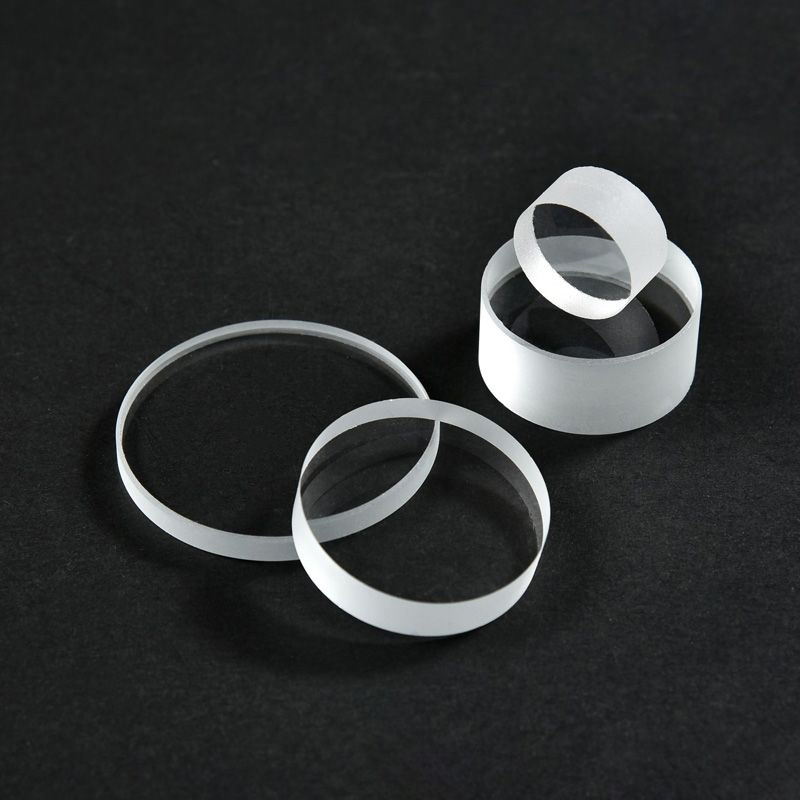
Process pressure is rarely the primary cause of mechanical failure; uneven flange sealing stress and edge crushing account for the majority of structural breaches.
High-pressure ratings degrade rapidly as temperature increases due to the non-linear relationship of thermodynamics in steam and chemical applications.
Traditional bolt-on glass discs offer lower safety margins compared to metal-fused round sight glass assemblies, which pre-stress the glass to eliminate tensile vulnerability.
Specifying thickness alone is insufficient; evaluating thermal expansion compatibility between the glass, gasket, and metal housing is critical to preventing stress fractures.
Many operators assume internal process pressure directly shatters the glass. This remains a common industrial misconception. The truth looks quite different. Most industrial sight glasses naturally possess a massive safety margin. They typically feature a two to ten times safety factor against static pressure. If your system runs at 100 PSI, the raw glass disc can often handle over 500 PSI structurally. Pure pressure-driven blowouts rarely occur during normal field operations. You must look elsewhere for the real root cause of mechanical failure.
The true danger lies in the installation and maintenance phases. Technicians often apply excessive or uneven torque to seal the system. Even low-pressure applications require significant clamping force. You need this force to compress the gaskets fully. This action creates immense compression forces along the glass perimeter. At the glass edge, this heavy compression converts directly into tensile stress. Tensile stress represents the absolute weakest mechanical state for any silicate material.
Common Installation Mistakes
Using improper torque wrenches during routine maintenance.
Failing to tighten flange bolts in a strict star pattern.
Reusing old, hardened gaskets that require extra torque to seal properly.
This localized tensile stress compounds rapidly with environmental factors. Microscopic surface defects naturally exist at the edge of a Round Sight Glass. Materials scientists call these microscopic imperfections Griffith flaws. Under normal conditions, they remain harmless. However, when exposed to moisture or aggressive chemicals under high tension, these flaws grow. Water molecules actively attack the stretched silicate bonds. They propagate rapidly into catastrophic fractures. The entire glass structure fails suddenly and completely, often without any prior visible warning.
Engineers have used conventional assemblies for decades. They feature a very straightforward mechanical design.
Mechanism: A standalone glass disc sits compressed between two soft gaskets and heavy metal flanges. Bolts clamp the entire assembly together.
Trade-offs: These units offer a lower upfront cost. They are also relatively easy to replace in the field. However, they remain highly susceptible to operator error during bolt-torquing. A slight misalignment creates fatal stress concentrations. We highly recommend reserving these conventional assemblies for low-to-moderate pressure systems. Avoid using them in applications involving extreme thermal cycling.
Modern engineering dictates a safer approach for hazardous environments. The fused sight glass represents a massive leap in process safety.
Mechanism: Manufacturers melt a solid piece of borosilicate glass directly into a duplex stainless steel or exotic alloy ring. The components bond at an atomic level in a high-temperature furnace.
Engineering Advantage: The metal ring shrinks much more than the glass during the cooling phase. This deliberate mismatch creates permanent, massive compressive stress on the glass element. The glass never experiences tension during normal operation. This pre-stressing virtually eliminates the risk of sudden catastrophic failure. It holds strong even under extreme pressure spikes.
Verdict: Fused construction serves as the mandatory standard for critical operations. You must use them for high-pressure, high-temperature, and hazardous chemical applications.
Pressure ratings are never static. They degrade dynamically based on operating temperatures. A standard Round Sight Glass might hold 300 PSI at room temperature. That same glass might fail at 150 PSI inside a saturated steam environment. Thermodynamics dictate a non-linear relationship here. As heat rises, the material weakens internally. You must calculate the exact pressure and temperature matrix for your specific process.
Chart: Typical Thermal Degradation Summary
Operating Temperature (°C) | Max Safe Pressure (PSI) - 12" Assembly | Safety Margin Impact |
|---|---|---|
20°C (Room Temp) | 350 PSI | Optimal / 100% Retained |
100°C | 275 PSI | Moderate degradation |
150°C | 190 PSI | Significant degradation |
200°C | 110 PSI | High risk / Critical limits |
Note: This chart provides a general summary. Actual performance varies by specific glass formulation and manufacturer specifications.
Material chemistry dictates the physical limits of your viewport. You must match the formulation precisely to your process medium.
Glass Material Type | Max Operating Temp | Primary Application Profile |
|---|---|---|
Tempered Soda Lime | < 150°C | Strictly for low-pressure, low-temperature utility applications. Offers high impact resistance but poor thermal shock tolerance. |
Borosilicate Glass | Up to 280°C | The industry workhorse. Provides high chemical resistance and low thermal expansion. Safely handles moderate to high pressure. |
Quartz / Sapphire | Up to 1450°C | Reserved for extreme heat and highly aggressive corrosive environments where standard borosilicate structural integrity would fail. |
Many engineers think they can simply increase glass thickness to solve pressure problems. This strategy creates a new set of challenges. Increasing the thickness of a Round Sight Glass severely reduces optical clarity. Light transmission drops significantly. You will likely struggle to see internal fluid levels or color changes clearly. Thick glass often necessitates expensive external illumination solutions. You must balance structural thickness against operational visibility.
Specifying safety components requires a rigorous, repeatable methodology. Follow these five sequential steps to ensure structural integrity and compliance.
Step 1: Calculate Peak vs. Operating Pressure
Step 2: Evaluate Thermal Compatibility
Step 3: Analyze Media Aggressiveness
Step 4: Determine Installation Constraints
Step 5: Verify Regulatory Compliance
Never specify a sight glass based solely on nominal conditions. Normal operations rarely cause failures. You must assess maximum potential pressure spikes. Consider worst-case scenarios meticulously. What happens during a blocked-pipe scenario? How much pressure builds up during a catastrophic valve failure? Your selected hardware must withstand these sudden, violent spikes without fracturing.
Materials expand differently when heated. The coefficient of thermal expansion (CTE) measures this behavior. You must ensure the CTE matches between the glass, the specific gasket material, and the metal housing. If you use a PTFE gasket with a rigid carbon steel frame and borosilicate glass, rapid heating will cause expansion-mismatch. The metal expands faster than the glass. This mismatch creates intense localized friction and eventual stress cracking.
High pressure pushes chemicals aggressively into the glass surface. Factor in long-term chemical erosion. Hot caustics and hydrofluoric acid will actively dissolve silicate materials. This chemical attack thins the glass over time. As the glass thins, its overall pressure threshold drops dangerously. You may need specialized protective shields or sapphire materials for highly alkaline processes.
Physical space and hygienic requirements dictate the mounting style. You must decide between weld-on configurations and bolt-on units. Weld-on units offer a permanent, sanitary, space-saving footprint. They eliminate heavy flanges and reduce potential leak paths. Bolt-on units allow easier replacement but require more physical clearance and meticulous torque management.
Industrial safety relies on strict regulatory codes. Ensure the selected assembly meets specific industry standards. In North America, the ASME Boiler and Pressure Vessel Code governs high-pressure design. Refineries typically adhere to API standards. These regulatory bodies often require heavily documented pressure tests and material traceability reports. Never install non-compliant hardware in a pressurized facility.
Purchasing departments often gravitate toward the cheapest initial option. This approach ignores the total cost of ownership (TCO). Under-specifying sight glasses creates massive hidden costs. You will face expensive maintenance labor when frequently replacing cracked conventional glass discs. System downtime costs infinitely more than the component itself. Every hour spent swapping a fractured disc results in lost production revenue.
We recommend viewing metal-fused units as a strategic investment. They carry a high upfront cost but deliver an incredibly low TCO. Fused glass assemblies require almost zero routine maintenance. They practically eliminate the risk of catastrophic spills. They extend replacement cycles drastically. You upgrade from replacing discs every few months to replacing entire units every few years. The long-term savings clearly justify the initial expenditure.
You must also quantify abstract risk mitigation. Pressure-driven blowouts lead to environmental fines. They destroy entire production batches. Most importantly, glass failures cause severe worker injury claims. A blowout releases high-velocity glass shrapnel and boiling chemicals into the work area. Investing in premium engineered sight glasses acts as an inexpensive insurance policy against these devastating industrial accidents.
A properly specified round sight glass will securely handle high-pressure environments. You must engineer the solution to account for complex thermal degradation, chemical attack, and dangerous seating stress. Relying solely on static process pressure ratings invites catastrophic failure. Moving forward, decision-makers must stop treating sight glasses as cheap commodity components. You should treat them as highly engineered critical safety devices.
We strongly recommend consulting with specialized glass manufacturers early in the design phase. Ask them to run exact worst-case scenario calculations. Demand full pressure and temperature matrices based on your exact process media before making a final specification. Proper engineering protects your equipment, your product, and your personnel.
A: Temperature and pressure share an inverse relationship. As system temperature rises, the maximum allowable working pressure strictly decreases. High heat weakens the internal material structure of the glass. It also causes uneven thermal expansion between the glass, metal housing, and gaskets. This thermal stress drastically lowers the mechanical threshold, meaning a glass rated for high pressure at room temperature may fail at half that pressure in a hot steam environment.
A: No. Surface scratches act as severe stress concentrators. In high-pressure applications, the material surrounding the scratch experiences amplified tension. Any visible abrasion, chip, or deep scratch requires immediate replacement of the glass element. Ignoring these defects allows microscopic cracks to propagate, which will eventually cause sudden, explosive fracturing under operational pressure loads.
A: Yes. Industrial best practices and strict regulatory codes usually require hydrostatic testing of the fully assembled unit. Technicians typically perform this test at 1.5 times the maximum allowable working pressure prior to final system commissioning. This physical test verifies both the structural integrity of the glass and the reliability of the flange and gasket sealing mechanisms.
A: While increasing thickness boosts raw static pressure tolerance, it severely exacerbates thermal shock vulnerabilities. A thicker glass disc creates a massive temperature differential between the hot inside face and the cooler outside face. This extreme temperature gap causes intense internal shearing forces. The glass will likely crack from thermal stress long before it ever fails from internal system pressure.


