
Please Choose Your Language
Views: 0 Author: Site Editor Publish Time: 2026-05-19 Origin: Site


Accurate level measurement in industrial vessels represents a critical safety and compliance requirement. Plant operators rely heavily on these instruments to keep systems running smoothly and securely. Choosing the wrong gauge type often leads to false readings, premature glass degradation, or even catastrophic blowouts. You need reliable tools to avoid costly downtime and ensure plant personnel remain safe. In this article, we provide a definitive, decision-stage engineering comparison between transparent and reflex level gauges.
You will learn the fundamental differences in their operating principles, physical structures, and ideal application environments. We also explore a common procurement scenario, such as specifying a Reflex Gauge Glass For 0il Tank versus opting for a transparent "thru-vision" setup for complex fluids. By understanding these nuances, you can select the correct instrumentation for your specific fluid types and operating conditions.
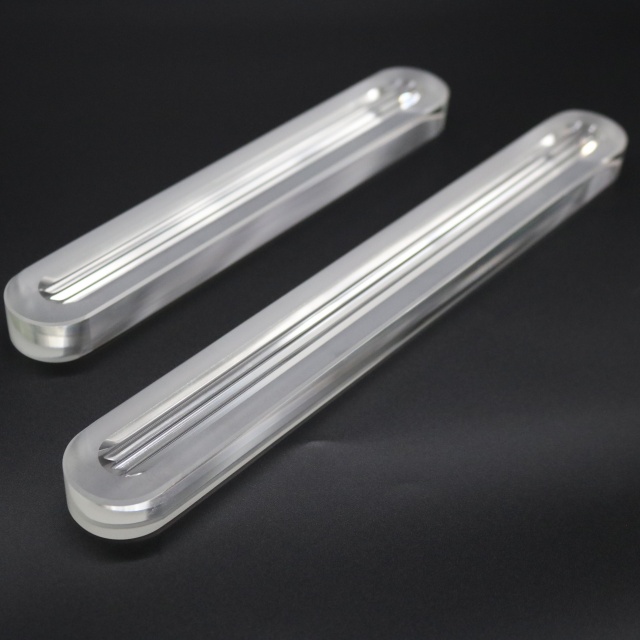
Reflex Gauges: Utilize 45-degree prism grooves to refract light, offering high-contrast (silver/black) readability without external lighting. Choosing a high-quality Reflex Gauge Glass For Oil Tank is the best practice for clean, colorless fluids or refined fuel storage where fast visual confirmation is required.
Transparent Gauges: Feature dual flat glass plates ("thru-vision") that allow direct observation of fluid color, quality, and multi-liquid interfaces.
The Shielding Rule: Transparent glass is mandatory for highly corrosive or high-pressure steam environments, as its smooth surface is required to mount protective Mica or Kel-F shields.
Cost vs. Capability: While transparent gauges are the versatile "default," reflex gauges offer lower Total Cost of Ownership (TCO) where applications permit.
Understanding how each level gauge works helps you avoid misapplications. Manufacturers engineer these two designs using completely different optical mechanisms. They both utilize tempered borosilicate glass, but they manipulate light in distinct ways.
Reflex gauges operate on the optical principle of refraction. If you examine the inner glass surface, you will notice precision-molded prisms angled at 45 degrees. These grooves face the process fluid directly.
When light enters the glass, it hits the prism area. If vapor or gas fills the space behind the prism, the light hits the glass-to-gas boundary. Because gas has a drastically lower refractive index than glass, the light reflects back to the observer. You see this as a bright, shimmering silver glow.
Conversely, if liquid covers the prism, the refractive index changes. The light passes right through the glass and into the fluid. The internal chamber absorbs this light. To the observer, the liquid space appears stark black. This stark contrast happens regardless of the actual fluid color.
Takeaway: This high contrast eliminates the need for strong external illumination. You can easily read the liquid level even when you install the gauge vertically or at a tilted angle.
Transparent level gauges rely on direct vision. Engineers build them using a robust "sandwich" structure. They feature a central metal liquid chamber flanked by two smooth, tempered borosilicate glass plates. Heavy-duty bolts clamp the front and rear covers together.
Because the fluid passes between two clear windows, you see exactly what the liquid looks like. It operates identically to looking through a conventional window pane. However, pure, clean liquids can be difficult to see against a metallic background. For this reason, facilities often install a rear-mounted illuminator. The backlight shines through the fluid, allowing operators to clearly see the meniscus line.
Feature | Reflex Level Gauge | Transparent Level Gauge |
|---|---|---|
Core Principle | Light refraction and reflection | Direct line-of-sight vision |
Glass Structure | Single glass pane, grooved inner surface | Dual glass panes, smooth inner surfaces |
Visual Output | Black (liquid) / Silver (gas) | True fluid color and transparency |
Illumination Needs | Ambient light is sufficient | Back-illuminator frequently required |
Selecting the right gauge requires a thorough understanding of your process media. What flows perfectly in one design might completely blind the other.
Reflex gauges dominate applications involving pure, clean fluids. They perform exceptionally well when operators only need to know the fluid height. Common applications include:
Boiler Feed Water: The high contrast makes it easy to spot water levels from a distance.
Refined Hydrocarbons: Clean fuels like gasoline or propane show up clearly as a black column.
Mono Ethylene Glycol (MEG): Process chemicals lacking distinct colors benefit from the prismatic contrast.
Liquid Gases: Refrigerants and liquefied natural gases provide excellent refraction properties.
Risk Warning: You must never use reflex gauges for dirty, viscous, or sticky fluids. Suspended solids or heavy oils will accumulate inside the 45-degree prism grooves. Once dirt fouls the prisms, light passes through the dirt instead of reflecting. The gauge will display a permanent dark signal, leading to dangerous false high readings.
Transparent gauges handle the complex jobs. They act as a literal window into your process pipeline. Facilities mandate their use for interface measurement. For example, if a tank holds diesel floating on top of water, an operator needs to see the exact separation line between the two fluids.
Reflex gauges cannot read interfaces. Any liquid touching a prism turns the glass black. You would simply see a solid black column, making the oil-water separation line invisible. Transparent gauges solve this. By looking through the dual plates, you can visually distinguish the lighter oil from the heavier water.
Furthermore, transparent models are crucial for observing fluid color changes. Process engineers rely on this visibility to monitor contamination, fluid degradation, or chemical reactions happening inside the vessel.
When procuring a Reflex Gauge Glass For 0il Tank, the decision hinges entirely on the specific properties of the fluid stored within.
You should confidently select a reflex model for refined, clean oil tanks. Think of finished products like diesel, kerosene, or aviation fuel. These liquids do not leave thick residues. Operators simply need a fast, high-contrast visual check to ensure the tank does not overfill. Selecting a professional Reflex Gauge Glass For Oil Tank provides the most reliable, easy-to-read signal under these conditions. It saves money and reduces maintenance time.
You must shift to a transparent design if the oil tank holds crude oil, heavy fuel oils, or residual byproducts. Crude oil is highly viscous. It will stick to a reflex prism, rendering it useless within days. Transparent gauges handle viscous oils much better, especially when you pair them with routine maintenance protocols.
You also need a transparent setup if you actively monitor water-drainage. Oil tanks often collect condensation. Operators must periodically drain the water off the bottom. They need a transparent gauge to watch the oil/water interface drop toward the drain valve. Relying on a reflex gauge here would cause accidental oil discharge.
Industrial environments push glass to its absolute limits. Extreme temperatures, high pressures, and aggressive chemicals require specialized protective measures.
High-pressure steam severely erodes raw borosilicate glass over time. To prevent blowouts, engineers install thin, transparent Mica shields between the fluid and the glass. For severely corrosive media like concentrated acids or hot alkalis, they use Kel-F (PCTFE) shields. These shields act as sacrificial barriers.
Hard Rule: You can only apply protective shields to the smooth surface of a transparent gauge. The grooved surface of a reflex gauge makes shield sealing physically impossible. If you attempt to press a flat Mica sheet against a jagged prism surface, process fluid will instantly leak behind the shield. The corrosive media will attack the glass anyway. If your process requires shielding, you must specify a transparent gauge.
Both gauge types comply with strict DIN 7081 standards. This standard dictates the dimensions, thermal shock resistance, and pressure ratings for tempered borosilicate sight glass. Due to this standardized sizing, you can equip both types with various performance add-ons:
Non-Frost Extensions: Used in cryogenic or low-temperature applications. A special acrylic block prevents frost buildup from obscuring the glass.
Anti-Solidification Heating Jackets: Surrounds the metal chamber with steam or thermal oil. This keeps viscous fluids like asphalt or heavy syrup flowing smoothly.
Integral Isolation Valves: Features ball-check mechanisms. If the glass breaks, a small metal ball snaps shut, preventing massive fluid loss.
While both support these mechanical upgrades, transparent models uniquely pair with high-intensity LED back-illuminators. These lighting systems cut through murky fluids and make interface layers pop visually.
Facility managers must balance upfront capital expenditure (CAPEX) against long-term operational expenses (OPEX). Choosing between these two designs impacts your maintenance budget significantly.
Engineers often refer to transparent gauges as the "safe default option." They can perform nearly all the functions of a reflex gauge. However, this versatility comes at a steep price. Transparent gauges require two heavy glass plates, twice the number of sealing gaskets, and a bulkier metal frame to hold everything together. This drives up initial procurement costs. Furthermore, maintenance technicians must clean and inspect two distinct panes during outages, increasing labor hours.
Reflex gauges offer a much lower initial CAPEX. Because they only utilize a single glass pane facing the operator, they require fewer parts. Maintenance is substantially faster. Provided the fluid remains clean, they offer exceptional long-term value.
Cost Factor | Reflex Level Gauge | Transparent Level Gauge |
|---|---|---|
Initial CAPEX | Lower (Single glass pane) | Higher (Dual glass panes) |
Maintenance Labor | Minimal (One surface to clean) | Moderate (Two surfaces to clean) |
Replacement Parts | Cheaper (Fewer gaskets required) | More expensive (Double gaskets/glass) |
Auxiliary Equipment | None usually required | Illuminators often needed (added cost) |
Your return on investment depends on avoiding specification errors. Over-specifying a transparent gauge for a simple, clean water tank wastes budget unnecessarily. You pay for extra glass and maintenance you do not need. Conversely, under-specifying a reflex gauge for dirty or corrosive fluids guarantees rapid equipment failure. The prisms will foul or the glass will dissolve, leading to costly process downtime and safety hazards.
Choosing the correct level gauge boils down to understanding your specific process needs. We can summarize the final decision logic quite simply. Do you strictly need to know where the liquid is? Specify a reflex gauge for its high contrast and cost efficiency. Do you need to know what the liquid looks like, spot an interface between two fluids, or protect the glass from caustic media using shields? Specify a transparent gauge.
As a next step, we strongly encourage engineers to evaluate their process conditions thoroughly. Map out your fluid viscosity, potential interface requirements, and peak operating temperature and pressure. Gather this data before consulting with a valve and instrumentation specialist. A proactive approach ensures you install a gauge that delivers accurate readings, maximizes safety, and optimizes your long-term maintenance budget.
A: No. Reflex prisms register any liquid as dark/black, making it impossible to distinguish between two different overlapping liquids. You must use a transparent gauge to visually separate the distinct layers of oil and water.
A: Mica shields require a perfectly flat, smooth glass surface to form a protective seal. The internal face of a reflex glass is textured with 45-degree prism grooves. Process fluid would instantly leak behind the shield, rendering it useless.
A: Yes. DIN 7081 is the strict industrial standard governing the dimensions, thermal shock resistance, and pressure ratings for tempered borosilicate glass used in both designs. It ensures consistent safety and performance across manufacturers.
A: While not strictly required, back-illuminators are highly recommended by manufacturers. They ensure operators can clearly define the liquid meniscus, especially when working with clear fluids or operating in low-light plant environments.


