
Please Choose Your Language
Views: 0 Author: Site Editor Publish Time: 2026-05-20 Origin: Site


Buyers today increasingly question the safety and durability of commercial glass materials. Historically, premium household and industrial brands relied heavily on advanced technical glass. Recently, many of these manufacturers shifted their production toward cheaper, more fragile alternatives to cut costs. This market pivot leaves facility managers, engineers, and everyday consumers doubting overall material reliability.
You must understand the distinct differences between standard soda-lime glass and engineered borosilicate options. Standard soda-lime glass dominates the global market because it costs significantly less to melt and mold. However, demanding environments expose its inherent weaknesses quickly. While regular glass works adequately for basic, low-stress applications, high-grade technical materials behave entirely differently.
Advanced options like a Borosilicate 4.2 Glass Sheet offer drastically higher safety margins. They deliver exceptional chemical inertness and unparalleled thermal shock resistance. This guide unpacks the hard chemical evidence, structural variations, and true lifecycle costs. We will help you understand these metrics to make an informed, confident material specification.
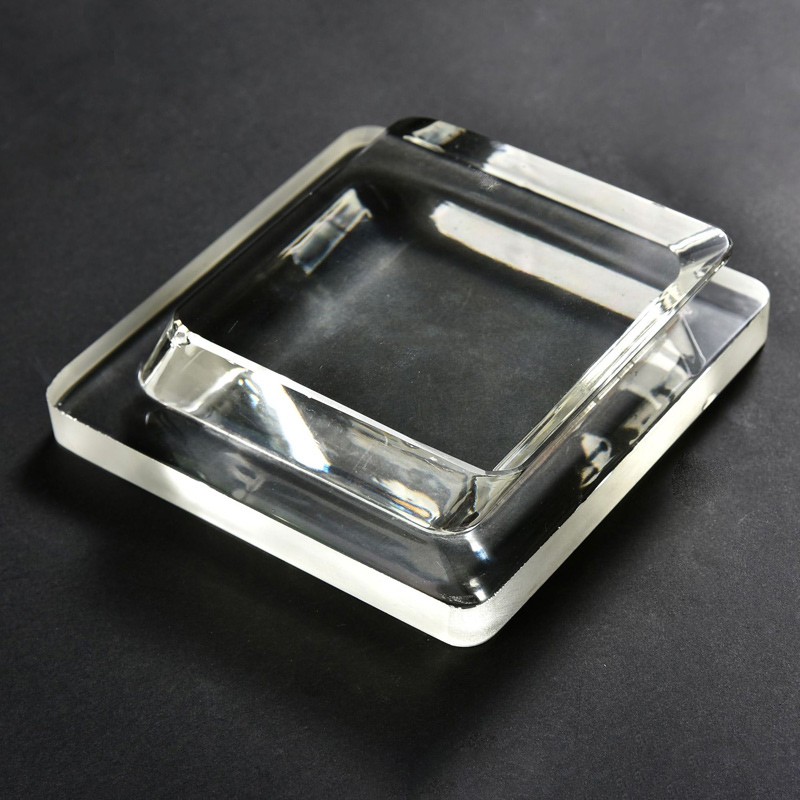
Chemical Stability: Borosilicate glass utilizes boron trioxide to create an exceptionally tight molecular structure, effectively eliminating chemical leaching (even in highly acidic or high-heat environments).
Thermal Safety: Unlike regular soda-lime glass, borosilicate resists extreme temperature fluctuations, heavily reducing the risk of explosive shattering.
The Aluminum Myth: Trace elements like aluminum oxide exist as locked "structural oxides" within borosilicate, not as free metallic elements that can leach.
Material Selection: Specifying a Borosilicate 4.2 glass sheet requires higher upfront investment but delivers a stronger ROI for high-stress applications (e.g., architectural, laboratory, or advanced manufacturing) due to longevity and compliance.
Structural integrity defines the safety profile of any industrial glass. Regular soda-lime glass relies on a basic silica matrix fused using calcium and sodium. Manufacturers love this blend because it melts easily. However, substituting calcium and sodium for boron trioxide fundamentally alters the material behavior.
True borosilicate formulas contain between 12% and 15% boron trioxide. This specific chemical substitution creates a remarkably dense, non-porous matrix. The boron atoms effectively reinforce the microscopic structure. They bind the internal elements together much tighter than sodium ever could. This creates a chemically reinforced barrier against external elements.
You cannot ignore the stark differences in leaching risks. Standard soda-lime glass interacts chemically over time. When exposed to highly acidic liquids or prolonged heat, regular glass slowly leaches sodium ions. This slow degradation contaminates laboratory test results and alters industrial food processing batches. Borosilicate glass completely neutralizes this risk. Its tight molecular network locks every component permanently in place. Even aggressive chemical washes cannot break this bond.
We must also address a common public concern known as the aluminum myth. Some buyers worry about aluminum toxicity when reviewing glass composition sheets. They see trace elements like aluminum oxide and fear chemical exposure. This fear stems from a misunderstanding of glass chemistry. Aluminum oxide acts as a highly stable, structural backbone inside the glass. It behaves nothing like free metallic aluminum. The melting process fuses it into a structural oxide. It simply cannot leach out into liquids or outgas into the air.
To verify these safety claims, always look for recognized regulatory certifications. Legitimate technical glass carries strict compliance ratings. These standards prove its safety profile beyond manufacturer marketing.
ISO 3585: The international standard defining the rigorous properties required for true borosilicate glass 3.3.
ASTM E438 Type 1 Class A: The benchmark specification for glass used in laboratory apparatuses, demanding maximum chemical resistance.
USP Type I: Medical-grade classification confirming the material is suitable for packaging injectable pharmaceutical fluids without contamination.
Temperature fluctuations destroy regular glass rapidly. We call this the thermal shock problem. When you expose standard glass to sudden heat, the physical material expands. If you pour hot water into a cold soda-lime container, the inside surface expands faster than the outside surface. This uneven physical expansion creates immense internal stress. The rigid structure cannot bend, so it violently shatters.
Borosilicate glass solves this exact problem through mechanics. It possesses an exceptionally low Coefficient of Thermal Expansion (CTE). When subjected to rapid temperature swings, the material barely expands at all. The internal and external surfaces remain stable. You can move borosilicate directly from a freezing environment to a boiling one safely. The dimensional stability prevents the explosive shattering associated with standard materials.
However, we must maintain scientific credibility regarding breakage profiles. Borosilicate glass is entirely safe, but it is not unbreakable. Many buyers mistakenly assume high thermal resistance equals high impact resistance. This is false.
While borosilicate handles thermal stress flawlessly, standard tempered glass handles blunt physical impact better. If someone strikes a glass panel with a hammer, tempered glass survives the blunt force longer. Tempered glass also breaks into relatively safer blunt cubes. Borosilicate will crack into sharp shards if struck hard enough. You must specify your material based on the actual environmental hazard: thermal stress or blunt force trauma.
You also need to understand actual high-temperature operational limits. Manufacturers often market "heat resistance" vaguely. True borosilicate capabilities far exceed basic household requirements.
Household Use: Typical kitchen temperatures rarely exceed 250°C (480°F). Borosilicate handles this effortlessly without structural fatigue.
Commercial Capability: Industrial grades maintain their integrity continuously up to 450°C (842°F).
Degradation Point: Structural softening only begins above 500°C. You will never reach this limit outside specialized manufacturing environments.
Engineers and buyers must match the correct glass to the specific environmental demand. Over-specifying wastes money. Under-specifying invites catastrophic failure. Use this straightforward evaluation framework to guide your procurement strategy.
Soda-Lime (Regular) Glass: This remains the undisputed champion for low-cost, ambient-temperature applications. You see it everywhere in single-use beverage bottles, standard household windows, and light consumer packaging. If your application never faces thermal shock, strong acids, or heavy physical impacts, soda-lime provides an adequate and cheap solution.
Tempered Glass: This serves as the optimal choice for physical impact resistance. Manufacturers create it by rapidly cooling hot soda-lime glass. This process traps immense tension inside the core. It works perfectly for safety glazing, passenger vehicle windows, and commercial shower doors. However, tempered glass holds a hidden vulnerability. It absolutely fails under uneven thermal stress. A small hot spot on a cold tempered panel will cause spontaneous explosion.
Borosilicate 4.2 Glass Sheet: This represents the technical standard for demanding engineering. You specify this when your project requires both pristine optical clarity and extreme thermal stability. It serves as the ideal foundation for industrial sight glasses monitoring chemical vats. Advanced manufacturers rely on it for 3D printing beds because it stays perfectly flat under high heat. Architects also utilize it for specialized fire-rated doors. When failure is not an option, you deploy a Borosilicate 4.2 Glass Sheet.
Material Type | Primary Strength | Major Vulnerability | Best Application |
|---|---|---|---|
Soda-Lime Glass | Low manufacturing cost | Shatters under thermal shock | Single-use packaging, household windows |
Tempered Glass | High physical impact resistance | Vulnerable to uneven heat stress | Shower doors, automotive glass, safety glazing |
Borosilicate Glass | Extreme thermal and chemical stability | Higher initial procurement cost | Industrial sight glasses, lab equipment, 3D printing |
We must address the elephant in the room regarding technical glass procurement. Upfront costs always pose a hurdle. Borosilicate glass costs significantly more to produce than standard alternatives. Manufacturers must heat the raw materials beyond 3000°F (1648°C) to achieve the proper melt. This massive energy requirement drives up the initial purchase price.
However, smart procurement relies on Total Cost of Ownership (TCO), not just initial price tags. You must factor in the hidden costs of regular glass failure.
Consider the liability and replacement reduction in an industrial setting. If a standard glass component shatters due to thermal shock, the actual glass cost means nothing. The true penalty comes from equipment downtime. You must halt production. You must discard contaminated product batches. You also risk severe physical injury to personnel. Specifying a Borosilicate 4.2 Glass Sheet eliminates these costly operational liabilities almost entirely.
Performance consistency also drives a massive Return on Investment (ROI). Harsh environments degrade cheap materials rapidly. Continuous UV exposure, daily acid washes, and extreme high-heat cycles weaken standard glass over months. Facilities end up replacing cheap glass multiple times a year. Upgrading your components drastically reduces this frequent replacement cycle. The material retains its clarity and strength indefinitely under normal industrial stress.
When purchasing at scale, buyers must evaluate specific scalability criteria. Do not just buy the cheapest technical glass available. Look for these essential indicators of manufacturer quality:
Manufacturer Consistency: Ensure the supplier uses a uniform melting process to prevent microscopic bubbles or striations.
Dimensional Tolerances: Demand strict thickness and flatness guarantees, especially for architectural or machinery uses.
Bulk Procurement Standards: Verify the supplier provides comprehensive testing certificates for every large-scale batch delivered.
The technical glass market suffers from confusing marketing and material downgrades. You need to understand the historical context to protect your procurement process. We often call this the "Pyrex precedent."
For decades, premium consumer brands built their reputations on pure borosilicate formulas. However, starting in the late 1990s, many companies quietly swapped their materials. They replaced expensive borosilicate with cheaper, tempered soda-lime glass to maximize profit margins. They kept the legacy brand names, leaving consumers unaware of the downgrade. This history serves as a major cautionary tale for modern industrial buyers. A recognizable brand name no longer guarantees specific chemical compositions.
You can perform practical visual and auditory checks to evaluate your materials. True borosilicate possesses distinct physical traits. When you tap a high-grade sheet with a metal object, it produces a distinct, clear, ringing sound. Cheap soda-lime glass produces a dull, flat thud.
You should also inspect the edge coloring. Look closely at the cut edge of the glass sheet under natural light. Soda-lime glass typically displays a dark blue or deep green tint along the rim. Authentic technical borosilicate usually features a completely clear or very pale yellowish edge. These quick field tests help identify gross material misrepresentations.
However, field tests cannot replace rigorous procurement verification. You must enforce strict documentation rules. When purchasing industrial materials, always demand raw material specification sheets. Do not accept vague terms like "heat-resistant glass."
You need documented proof confirming the minimum boron content. Ensure the manufacturer guarantees the specific Coefficient of Thermal Expansion (CTE) required for your project. Asking for these hard data points prevents suppliers from slipping blended downgrades into your supply chain. Diligence here saves thousands of dollars in premature failures later.
The evidence firmly establishes the superior safety profile of advanced technical glass. While regular soda-lime glass functions perfectly well in basic, inert environments, it presents massive physical and chemical liabilities under stress. Borosilicate provides an engineered safety net that completely neutralizes thermal shock and chemical leaching risks.
You should view advanced glass not as a premium expense, but as a long-term risk mitigation strategy. To maximize your operational safety, consider taking these next steps:
Audit your current facility to identify areas experiencing high glass failure rates or recurring thermal stress.
Calculate the true cost of your equipment downtime related to material breakage over the last two years.
Consult with a technical glass specialist to determine if upgrading to a premium Borosilicate 4.2 Glass Sheet directly aligns with your compliance requirements.
Update your procurement guidelines to demand specific boron content certificates rather than relying on generalized brand names.
A: No. Authentic borosilicate is completely free of lead, cadmium, and BPA. Its tight molecular structure prevents any chemical transfer, making it exceptionally safe for food processing, laboratory testing, and everyday use.
A: While it has exceptional thermal resistance, direct and uneven flame contact without proper heat diffusion can still cause extreme localized stress over time. Safe application heavily depends on the specific sheet thickness and material grade used.
A: Borosilicate achieves its strength chemically at the molecular level. This allows manufacturers to cast it thinner and lighter without sacrificing thermal resistance. Conversely, tempered glass relies entirely on physical surface tension, which requires substantial thickness to maintain its impact strength.
A: Cost. The manufacturing energy required to melt and form borosilicate is significantly higher due to temperatures exceeding 3000°F. This overhead leads many consumer brands to prioritize cheaper soda-lime materials to protect their profit margins.


