
Please Choose Your Language
Views: 0 Author: Site Editor Publish Time: 2026-05-20 Origin: Site


For facility engineers managing oil-fired boiler systems, level indication is a strict compliance mandate, not just an operational preference. System failures due to dry-firing or liquid carryover carry catastrophic safety and financial risks. Outfitting an oil-fired boiler requires evaluating two distinct fluid environments. You must monitor the high-pressure, high-temperature steam and water inside the boiler shell. Simultaneously, you must track the hydrocarbon storage in the fuel feed system. Both areas demand precise instrumentation to prevent costly downtime.
This guide breaks down exact ASME compliance standards for boiler water sight glasses. We will unpack the physics of selecting the right glass for dark fluids and atmospheric tanks. You will also learn a framework for minimizing Total Cost of Ownership through strategic material selection. By understanding these engineering principles, you can ensure reliable operation across your entire steam generation system.
Compliance Baseline: ASME Section I (PG-60) requires one direct-reading gauge glass for boilers under 400 psi, and two for systems exceeding 400 psi (with specific remote-indicator substitution rules).
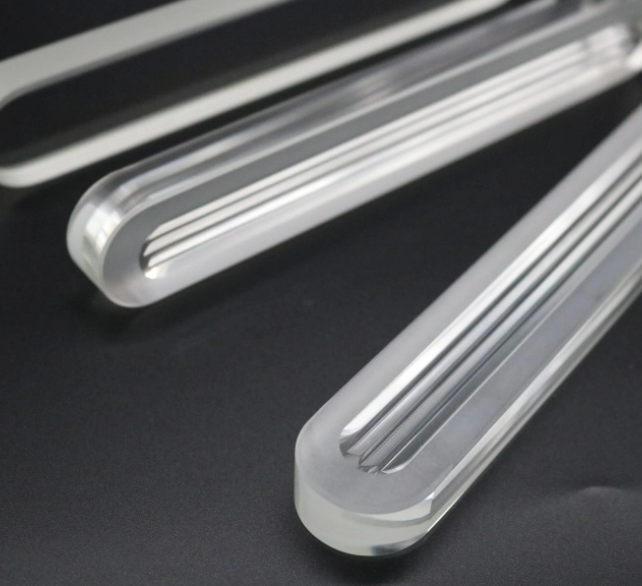
Fluid-Specific Hardware: While transparent gauges are standard for high-pressure water, installing a professional Reflex Gauge Glass For Oil Tank is the technical standard for dark fluids like heating oil, offering superior contrast and safety without the need for external illumination.
Remote vs. Direct: Magnetic Level Indicators (MLIs) and radar transmitters classify as remote indicators under ASME code; they augment but do not legally replace direct-reading physical sight glasses.
Failure Mitigation: Over 70% of sight glass failures stem from improper installation torque, thermal shock, or chemical erosion (high pH water or corrosive condensates).
Understanding the regulatory framework for the boiler's water side is critical. The American Society of Mechanical Engineers (ASME) establishes strict rules under Section I (PG-60). These codes dictate exactly how you must outfit fixed-level steam boilers.
If your boiler operates below 400 PSI, the code dictates a minimum of one direct-reading visible gauge glass. This physical window allows operators to visually confirm the actual water level. You cannot substitute this single direct reader.
Installation positioning is equally heavily regulated. Code requires you to mount the assembly precisely. The lowest visible point of the glass must sit at least one to two inches above the lowest permissible safe water level. The exact height clearance depends on your specific boiler type and total volume. This buffer zone protects the system. If water vanishes from the glass, you still have a brief window to shut down the burner before dry-firing occurs.
Once your Maximum Allowable Working Pressure (MAWP) exceeds 400 PSI, the rules change. ASME code strictly requires two independent gauge glasses. The increased pressure introduces higher risks of catastrophic failure.
However, ASME offers a strategic exception for modern facilities. You can substitute one of the direct-reading glasses. You may replace it using two independent remote level indicators. Common choices include differential pressure (DP) transmitters or Magnetic Level Indicators (MLIs).
This substitution strategy offers a massive operational advantage. It allows you to valve out (isolate) the remaining single physical glass during normal operation. High-pressure steam condensate aggressively erodes glass over time. By isolating the physical glass, it functions purely as a legally required backup. You rely on the remote sensors for daily monitoring. This drastically extends the life of your expensive high-pressure sight glass.
Facilities operating near coastal regions or offshore face even stricter rules. The Code of Federal Regulations (46 CFR) governs marine environments. If your boiler operates in maritime or offshore settings, standard tubular glass is prohibited once MAWP exceeds 250 psi. You must install heavily armored flat glass (transparent type). The environment demands superior resistance to mechanical impacts and ship motion.
Below is a quick reference chart summarizing these ASME and CFR compliance thresholds.
Operating Condition | Required Direct Glasses | Allowed Substitutions | Glass Type Requirements |
|---|---|---|---|
Standard (< 400 PSI) | 1 Minimum | None (Cannot replace the single glass) | Tubular or Flat Transparent |
High Pressure (> 400 PSI) | 2 Minimum | Replace 1 glass with 2 Remote Indicators | Flat Transparent (often with Mica) |
Marine / Offshore (> 250 PSI) | 2 Minimum | Specific regulatory reviews required | Armored Flat Glass ONLY |
We must transition our focus from the high-pressure water side to the fuel storage side. Oil-fired boilers rely on day-tanks and bulk storage to maintain steady burner operation. Monitoring this fuel supply introduces entirely different fluid challenges.
Heating oil presents unique optical problems. If you use standard tubular or flat transparent gauges, the fluid is difficult to read. Boiler rooms frequently suffer from low light conditions. Dark oil inside a clear tube blends into the dark background of the facility.
Furthermore, hydrocarbon fouling creates a persistent nuisance. Heating oil leaves a dark, sticky residue on the inside of the glass. Over time, this stain mimics the appearance of a full tank. Operators glance at the stained glass and falsely believe the oil level is high. This false reading can lead to unexpected burner shutdowns when fuel actually runs dry.
Engineers solve this visibility crisis by installing a Reflex Gauge Glass For 0il Tank applications. Reflex (or prismatic) gauges completely alter how light interacts inside the chamber.
The optical physics are highly effective. Reflex gauges feature precision-molded internal prisms running vertically along the glass. When ambient light hits the empty gas or vapor space above the oil, it hits the prisms. The light reflects back entirely toward the operator. This makes the empty space appear brightly silvery-white.
Conversely, when light hits the actual liquid oil, the refractive index changes. The oil fills the prism grooves. The light absorbs into the dark fluid rather than bouncing back. The liquid zone appears stark, solid black.
This sharp silver-to-black contrast provides a massive operational benefit. It absolutely prevents operator misreads. You do not need to install expensive backlighting assemblies. The ambient light of a standard boiler room is entirely sufficient to read a reflex gauge.
The oil day-tank operates at atmospheric conditions or relatively low pressures. It rarely matches the extreme stresses found inside the boiler shell. Because of this, you do not need extreme high-pressure glass.
A Reflex Gauge Glass For 0il Tank usage prioritizes chemical compatibility over raw pressure resistance. Borosilicate glass is the ideal architectural choice here. It resists hydrocarbon degradation indefinitely. It remains the most cost-effective, long-term solution for fuel monitoring.
When you evaluate replacement hardware, you must distinguish between the water side and the oil side. Selecting the right components ensures safety and extends maintenance intervals. Consider these critical engineering criteria.
The core material defines the gauge's operational limits. You typically choose between two primary industrial glass formulations.
Borosilicate (Industry Standard): This material features an extremely low coefficient of thermal expansion (3.3 × 10⁻⁶/K). It delivers exceptional resistance to thermal shock. When cold air hits hot glass, borosilicate resists shattering. It is the default choice for standard steam boilers and oil tank reflex gauges.
Aluminosilicate: Engineers specify this material for extreme high-pressure steam environments. It provides significantly higher mechanical strength. It withstands higher temperatures but carries a steeper procurement cost.
Boiler water chemistry often destroys unprotected glass. High pH or high-alkalinity water acts as a solvent. It aggressively etches silica out of the glass structure. Over time, the glass thins out, clouds over, and eventually ruptures.
To combat this, you must specify mica shields (Mica discs). You install these incredibly thin, transparent mineral sheets inside high-pressure transparent steam gauges. The mica physically separates the structural glass from the caustic steam condensate.
Best Practice Note: You cannot use mica shields with reflex glasses. The mica sheet would cover the internal prisms, destroying the refractive optics. This physical limitation reinforces a core industry rule: a Reflex Gauge Glass For Oil Tank is strictly reserved for oil, fuel, and low-pressure clear fluids where high-contrast visibility is required. Conversely, transparent glass (shielded with mica) is mandated for corrosive, high-pressure steam applications.
The glass itself is only one part of the assembly. The connection hardware must meet rigorous safety codes. Always specify systems using standard Nominal Pipe Size (NPS) connections.
Vessel Connections: ASME dictates a minimum 3/4-inch connection size for mounting the gauge to the boiler shell. This prevents scale and sludge from clogging the entry ports.
Blowdown Valves: The assembly must include integrated blowdown valves. These must have a minimum 1/4-inch diameter.
Discharge Routing: You must route all blowdown discharge lines to safe, designated drainage zones. High-pressure steam blowdown can fatally scald operators during routine maintenance. Never allow a blowdown valve to discharge freely into an open walkway.
Capital expenses only represent a fraction of your sight glass costs. Real-world maintenance realities drive the true Total Cost of Ownership (TCO). Understanding how and why these units fail helps you avoid premature replacements.
Our experience shows that hardware defects rarely cause sight glass blowouts. Operator error and poor maintenance procedures drive most failures. Below is a matrix detailing common failure modes and actionable solutions.
Failure Mode | Root Cause | Engineering Solution / SOP |
|---|---|---|
Stress Cracking | Uneven torque applied to flange bolts during installation. Creates severe pinch points on the glass surface. | Mandate strict diagonal-cross bolting procedures. Use calibrated torque wrenches set to manufacturer specs. |
Thermal Shock | Introducing cold feed water into a hot gauge, or rapid draft cooling from open boiler room doors in winter. | Implement strict pre-warming SOPs. Crack valves slowly to introduce heat gradually before full operation. |
Chemical Leaching | High-temperature, high-pH condensate dissolving the silica directly from the glass matrix. | Upgrade to premium mica shielding. Alternatively, isolate the direct gauge using remote indicator substitutions. |
Smart procurement strategies directly reduce downtime. You should actively avoid custom-cut glass wherever possible. Custom dimensions require special manufacturing runs. This stretches lead times from a few days to several weeks. Instead, standardize your facility around DIN 7080 or ANSI standard sizes.
You must also enforce strict on-site inventory rules. You should always hold at least one complete spare set per active boiler. A complete set includes the glass, specific high-temperature gaskets, and proper sealing rings. If a boiler fails an inspection due to a leaking glass, inspectors will shut it down immediately. You never want to suffer thousands of dollars in regulatory shutdown costs over a missing $100 consumable part.
The number of gauge glasses on an oil-fired boiler system is dictated strictly by operating pressure. You need one for standard operations under 400 psi. You must install two for high-pressure systems. However, holistic system design requires looking far beyond just the steam side regulations.
Equipping your fuel storage with a purpose-built reflex gauge glass ensures fail-safe fuel monitoring. The pristine silver-to-black contrast eliminates operator guesswork. On the water side, applying ASME-compliant isolation strategies dramatically reduces glass erosion. We recommend taking three immediate steps to optimize your facility:
Audit your current boiler room to verify 400-PSI compliance and confirm blowdown valve routing.
Replace standard tubular oil tank gauges with high-contrast reflex optics to eliminate hydrocarbon fouling errors.
Establish a mandatory local inventory, stocking one complete set of standard-sized glass and gaskets for every active vessel.
Evaluate your current sight glasses based on thermal properties, operator visibility, and maintenance accessibility rather than upfront unit cost alone.
A: No. Under ASME Section I PG-60, an MLI is classified as a remote indicator. While highly reliable, it cannot entirely replace the physical, direct-reading sight glass required by code. It can only be used as a supplementary device or as part of a substitution strategy (two remote plus one isolated direct glass) on boilers operating over 400 psi.
A: Rapid level fluctuations, or bouncing, are completely normal in high-load boilers. This movement happens due to aggressive internal water circulation, continuous evaporation, and condensate return loops. However, if the bouncing becomes exceptionally violent, it may indicate liquid carryover or poor water chemistry. In those cases, you likely need a bottom blowdown to clear sludge.
A: To cut a replacement glass accurately, you must measure the distance between the facing surfaces of the upper and lower valve fittings. Next, add the depth of exactly one stop casting to that measurement. Always ensure the entire system is fully isolated, drained, and completely cooled before you attempt to remove the old glass.


